
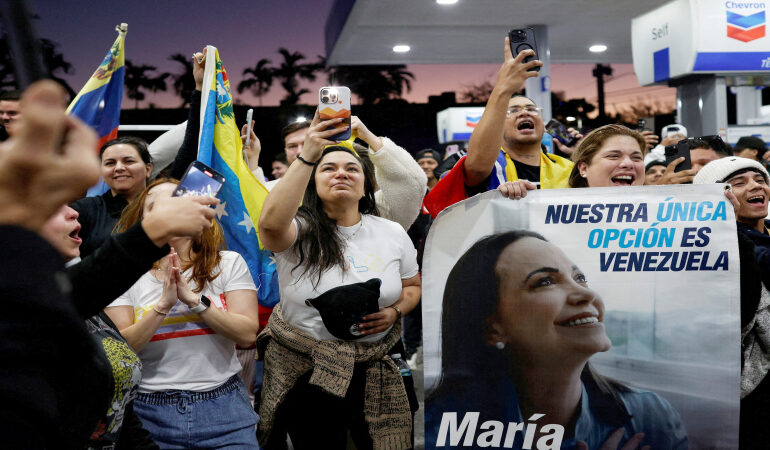

Across south and central Florida, Venezuelan communities are processing rapid political developments in their homeland with a mix of relief, disbelief, and cautious hope. News of the sudden removal of Nicolás Maduro by United States forces reverberated through homes, churches, and social networks in the early hours of January 3, marking a moment many exiles had imagined but never fully expected to witness. For families displaced by years of economic collapse, repression, and forced migration, the event has been interpreted less as a geopolitical maneuver than as a personal rupture with a painful past. Conversations across Florida reflect an emotional release shaped by memory of inflation, scarcity, and fear, alongside awareness that political change rarely delivers immediate stability. The moment has reopened long suspended questions about return, justice, and whether the country left behind can now begin a credible transition.
For Venezuelans who settled in Florida over the past two decades, the developments have revived memories of a slow unraveling that pushed millions into exile. Many describe leaving not as a single decision but as a gradual retreat from a society where daily life became unsustainable. Stories shared within the community recount businesses destroyed, relatives imprisoned, and medical care rendered inaccessible. In places such as Doral, often called Little Venezuela, parish churches became focal points for prayer and collective reflection in the days following the announcement. Clergy urged restraint and discernment, encouraging the faithful to pray for peace and justice rather than vengeance. This pastoral tone mirrors a broader sentiment among exiles who welcome the change while remaining wary of triumphalism, aware that political vacuum and instability can deepen suffering if not carefully navigated.
Alongside hope runs a deep undercurrent of uncertainty. While many Florida based Venezuelans support the removal of Maduro, few express confidence about what comes next. Reports of emergency measures imposed by interim authorities and intimidation of journalists have tempered early celebrations. Families remain concerned for relatives still in Venezuela, uncertain whether the collapse of a central figure will ease repression or provoke new forms of control. For younger members of the diaspora, some of whom left as children and rebuilt their lives in the United States, the moment carries both promise and distance. Venezuela is remembered as home but experienced as trauma, making the prospect of return emotionally complex. Conversations now revolve around patience, the need for institutional rebuilding, and the risk that external interests could shape outcomes disconnected from the lived realities of ordinary Venezuelans.
Despite these uncertainties, the prevailing mood within Florida’s Venezuelan communities leans toward guarded optimism. Many describe the moment as a necessary break with a system that had exhausted all internal avenues for reform. The hope expressed is not for instant prosperity but for the possibility of gradual normalization, rule of law, and eventual reconciliation. Churches, family networks, and civic groups have emerged as spaces where fear and expectation are held together, reflecting a diaspora accustomed to waiting while remaining attentive to fragile openings. For those who fled years ago, the developments mark not an end but a threshold, one that invites reflection on past mistakes and future responsibility. In that sense, hope is less about certainty and more about the chance to imagine Venezuela beyond perpetual crisis.