

How Catholic Teaching Is Being Rearticulated for a Post-Consensus World
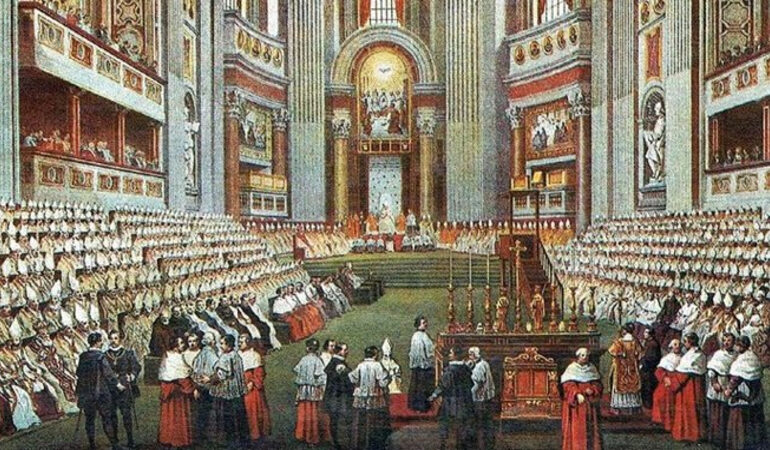

The Catholic Church is increasingly aware that it now speaks into a world where shared moral and cultural assumptions can no longer be taken for granted. Social consensus that once shaped public life in many societies has fragmented, leaving belief, authority, and tradition open to constant challenge. In this environment, the Church’s task is not only to teach but to be understood.
Rather than altering doctrine, the Church has begun rearticulating its teaching in ways that address this new reality. Under the leadership of Pope Leo XIV, emphasis has shifted toward clarity of meaning, careful language, and pastoral framing that engages a plural and often skeptical audience without surrendering theological integrity.
Teaching Faith in a Fragmented Moral Landscape
In a post-consensus world, Catholic teaching can no longer assume a common moral vocabulary. Concepts once widely accepted now require explanation before they can be evaluated. The Church has responded by placing greater emphasis on articulation rather than assertion.
This means presenting teachings with context and reasoning, not simply conclusion. Moral and doctrinal positions are increasingly framed within broader narratives of human dignity, responsibility, and community. This approach helps bridge gaps between belief and understanding.
By acknowledging fragmentation, the Church avoids speaking past its audience. Teaching becomes an act of engagement rather than declaration, grounded in tradition but attentive to contemporary realities.
From Cultural Authority to Moral Witness
The Church no longer occupies a position of assumed cultural authority in many societies. Recognizing this shift, Catholic teaching is increasingly offered as moral witness rather than institutional command.
This rearticulation emphasizes credibility over dominance. Teachings are presented as coherent visions of the human person rather than rules imposed from above. Moral reasoning is explained with reference to lived experience and ethical reflection.
Such an approach reflects confidence rather than retreat. The Church understands that persuasion in a plural world depends on integrity and consistency more than power or volume.
Language That Invites Rather Than Divides
One of the most visible changes in Catholic teaching is attention to language. Words are chosen carefully to avoid unnecessary confrontation while remaining faithful to meaning. This does not dilute doctrine but refines how it is communicated.
Inclusive and precise language helps ensure that teaching is accessible across cultures and social contexts. It reduces the risk of misinterpretation that can arise when theological terms are heard outside their intended framework.
This shift supports unity within the Church. When language invites engagement, it fosters dialogue rather than defensive reaction, especially among younger generations navigating faith in complex environments.
Formation Over Immediate Agreement
In a post-consensus world, the Church increasingly prioritizes formation over immediate acceptance. Teaching is understood as a process rather than a single moment of instruction.
This long view recognizes that belief matures through reflection, encounter, and lived experience. Rearticulated teaching invites individuals into a journey of understanding rather than demanding instant conformity.
Such formation strengthens faith communities. It encourages patience, depth, and discernment, qualities essential for sustaining belief in diverse and often challenging contexts.
Maintaining Continuity Amid Change
Rearticulation does not imply doctrinal change. The Church remains anchored in its theological foundations while adapting its expression. Continuity ensures that teaching remains recognizable and trustworthy even as its presentation evolves.
This balance protects the integrity of doctrine while allowing responsiveness. It affirms that truth is enduring, even when the language used to express it must adapt.
By maintaining continuity, the Church reinforces its identity as a tradition that speaks across centuries, capable of engaging new worlds without losing itself.
Conclusion
Catholic teaching is being rearticulated not because belief has weakened, but because the world has changed. In a post-consensus environment, clarity, credibility, and formation matter more than assumption. By adapting how it speaks while remaining rooted in tradition, the Church positions its teaching to be heard, understood, and engaged with in a fragmented age.