How the Vatican Maintains Global Unity Across Vast Cultural Differences
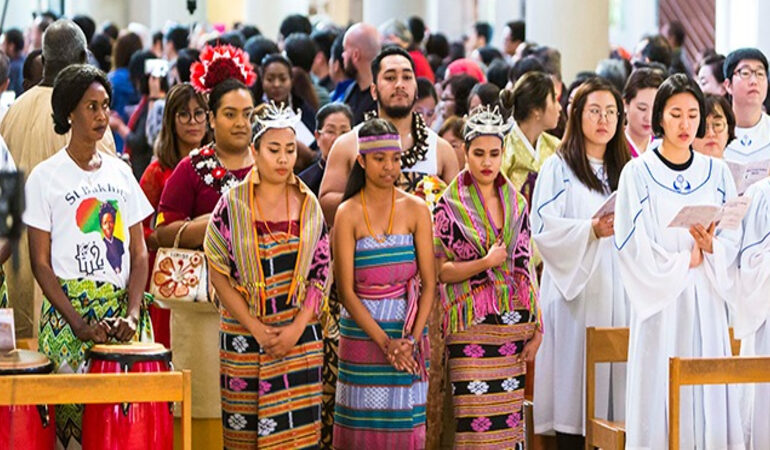

The Catholic Church is one of the few institutions that truly operates on a global scale. It exists simultaneously in major world capitals and remote rural communities, across democracies, monarchies, and fragile states. These cultural differences present an ongoing challenge. Yet despite this diversity, the Vatican continues to maintain a coherent global identity that transcends language, tradition, and social structure.
This unity is not accidental. It is the result of deliberate institutional design and long historical experience. The Vatican approaches global diversity not as a problem to be solved but as a reality to be ordered. Unity is preserved not through uniformity, but through shared principles that allow cultural expression to exist within a common ecclesial framework.
Universal Teaching as the Anchor of Unity
The most important tool for maintaining global unity is the Church’s commitment to universal teaching. Core doctrine and moral principles remain consistent regardless of cultural context. This universality ensures that Catholics across the world recognize the same foundational beliefs, even when practices and expressions vary.
By anchoring unity in teaching rather than culture, the Vatican avoids fragmentation. Cultural practices enrich worship and pastoral life, but they do not redefine belief. This distinction allows unity to remain intact while diversity flourishes within appropriate boundaries.
Governance Structures That Transcend Culture
Vatican governance structures play a critical role in maintaining unity across cultures. Clear lines of authority, consultation, and coordination ensure that local churches remain connected to the global Church. These structures provide consistency without erasing regional responsibility.
Local leadership operates within a shared governance framework that promotes accountability and coherence. This system allows cultural sensitivity while preventing isolation. Governance becomes a bridge between diversity and unity rather than a source of tension.
Language Discipline and Global Communication
Language is one of the most significant sources of cultural division. The Vatican addresses this challenge through careful language discipline. Official teaching and communication are framed in terms that translate across cultures without relying on culturally specific assumptions.
This discipline reduces misunderstanding and prevents teachings from being absorbed into local political or social narratives. By maintaining neutral and principled language, the Vatican ensures that messages retain universal meaning even as they are received within different cultural contexts.
Respecting Local Expression Without Fragmentation
The Vatican recognizes that faith must be lived locally. Worship styles, pastoral priorities, and community life naturally reflect cultural realities. Unity is maintained by distinguishing between legitimate expression and doctrinal deviation.
Local churches are encouraged to adapt pastoral methods while remaining aligned with universal teaching. This balance allows faith to remain authentic in diverse settings without becoming fragmented. Cultural expression strengthens the Church when it operates within shared identity.
The Role of Consultation and Synodality
Consultation has become an increasingly important tool for managing diversity. Through structured dialogue with bishops and church leaders worldwide, the Vatican gathers insight into regional realities without surrendering authority.
This consultative approach allows global leadership to remain informed while preserving coherence. Voices from different cultures contribute to understanding, but decision making remains anchored in institutional responsibility. Unity is strengthened through listening rather than decentralization.
Managing Tension Without Polarization
Cultural differences inevitably generate tension. The Vatican manages this tension by avoiding polarization. Rather than framing differences as conflicts, it treats them as variations within a single tradition.
This approach prevents cultural disagreements from becoming ideological divides. By emphasizing shared mission and belief, the Church reduces the risk of internal opposition. Unity is preserved through patience and institutional clarity rather than confrontation.
Historical Experience as a Guide
The Vatican’s ability to maintain unity across cultures is informed by centuries of experience. The Church has navigated empires, colonialism, modern nation states, and globalization. Each era introduced new cultural challenges.
This historical memory shapes current strategy. Unity is protected through gradual adaptation rather than abrupt change. The Church relies on structures that have proven resilient over time, allowing it to absorb cultural diversity without losing coherence.
Unity as a Moral Witness
Global unity is not only an administrative goal but a moral witness. In a fragmented world, the Church’s ability to remain united across difference serves as a visible counterexample to division.
By maintaining unity without erasing diversity, the Vatican demonstrates that coherence and pluralism can coexist. This witness reinforces the Church’s credibility and relevance in a divided global landscape.
Conclusion
The Vatican maintains global unity across vast cultural differences by anchoring faith in universal teaching, disciplined governance, and careful communication. By balancing local expression with institutional coherence, the Church preserves unity without uniformity. This approach allows a truly global faith to endure, adapt, and remain connected across cultures and generations.