


Indian Canon Law Conference Urges Synodal Service in Leadership
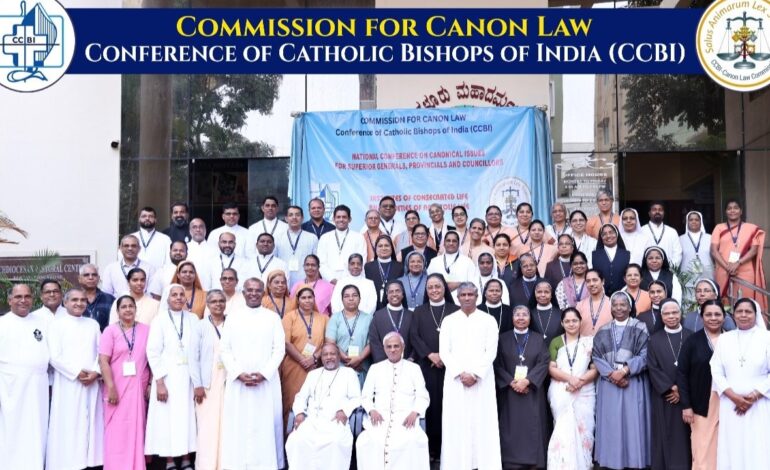

A national conference for major superiors and their councillors was recently held at Paalana Bhavan in Bangalore, bringing together eighty-seven leaders from institutes of consecrated life and societies of apostolic life across India. Organized by the Commission for Canon Law of the Conference of Catholic Bishops of India, the three-day gathering focused on the reinterpretation of leadership through a synodal lens, emphasizing that authority in the Church is a ministry of service rather than a hierarchical imposition. Participants engaged in discussions on how canonical responsibilities can be aligned with the Church’s vision of communion, participation, and mission. The conference underscored the importance of integrating ethical discernment, attentive listening, and pastoral care into the exercise of authority, aiming to nurture leadership that serves communities with integrity, humility, and a commitment to collective discernment and accountability within the Church’s institutional structures.
The opening Eucharistic celebration and keynote address were presided over by Archbishop Antonysamy Savarimuthu, chair of the Commission for Canon Law, who emphasized that synodal leadership requires inclusivity, unity, and a commitment to ethical consistency in both personal conduct and institutional governance. Archbishop Savarimuthu highlighted that leaders are called to model service-oriented authority, ensuring that canonical obligations are exercised in a manner that fosters cohesion, dialogue, and collaboration among members of consecrated life. The keynote speech set the tone for the conference, encouraging superiors to embrace principles of servant leadership grounded in the ongoing Synod on Synodality. By promoting a culture of shared responsibility, ethical stewardship, and pastoral sensitivity, the conference sought to equip Church leaders with practical guidance for navigating complex organizational and spiritual challenges while remaining faithful to the Church’s mission of service to the faithful and society at large.
Throughout the three-day gathering, participants examined best practices for leadership, reflecting on how canonical law can support ethical decision-making, social justice, and pastoral care. The conference emphasized the need for ongoing formation, both in spiritual discernment and administrative competence, to ensure that authority is exercised with transparency, accountability, and respect for human dignity. Attendees explored practical strategies for balancing institutional obligations with pastoral sensitivity, promoting environments where collaboration, consultation, and shared responsibility are central to governance. The event concluded with a reaffirmation that leadership within the Church must be synodal, ethical, and service-driven, highlighting the importance of aligning institutional authority with the values of communion, participation, and mission in order to foster vibrant, spiritually grounded, and socially responsible communities.