



Inside the Vatican’s Governance Transition What Quiet Reforms Reveal About Rome’s Priorities
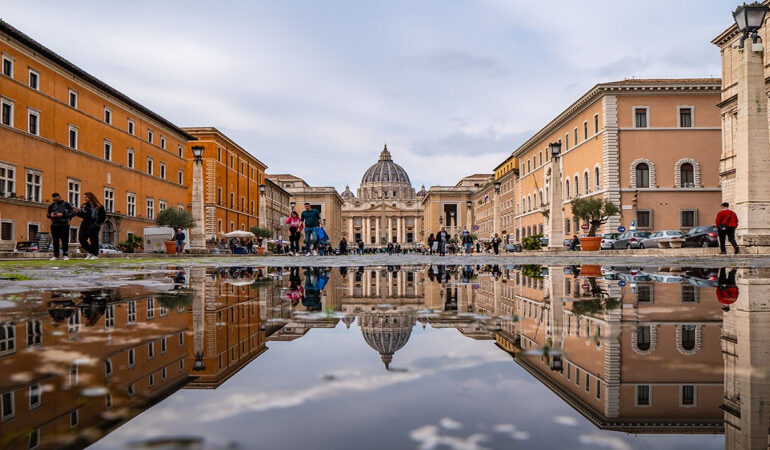

Governance within the Catholic Church rarely shifts through dramatic announcements. More often, change emerges gradually through decisions that attract little attention outside Rome. In recent months, Vatican City has entered such a phase, marked by administrative adjustments that signal a deeper recalibration of priorities.
These developments are not designed for headlines. Instead, they reflect an internal effort to strengthen institutional reliability after years of pressure from financial scrutiny, global crises, and structural complexity. For Vatican officials, the focus has turned toward coherence, accountability, and durability rather than rapid transformation.
Reasserting Institutional Memory as a Governing Asset
One of the most notable elements of the current transition is a renewed respect for institutional memory. Senior appointments and confirmations increasingly favor experience within established Vatican frameworks. This approach recognizes that governance within a global Church requires historical awareness as much as managerial skill.
Institutional memory provides continuity across pontificates and prevents policy swings driven by short term urgency. By valuing long serving officials and seasoned administrators, Rome reinforces procedural stability and preserves knowledge accumulated over decades. This does not exclude reform but ensures that reform is informed rather than improvised.
Such a recalibration also reassures external partners. Diplomatic missions and episcopal conferences depend on predictable channels of engagement. Stability within the Vatican’s administrative core strengthens trust across these relationships.
Financial Accountability as Moral Governance
Financial oversight remains a central concern shaping governance decisions. Rather than launching new reform bodies, the Vatican has focused on consolidating existing mechanisms and enforcing compliance. Budget discipline, procurement transparency, and internal auditing are being treated as permanent responsibilities rather than temporary corrections.
This emphasis reflects a broader understanding that financial governance is inseparable from moral credibility. In a Church that preaches ethical stewardship, internal discipline carries theological weight. Quiet enforcement sends a message that accountability is no longer optional or reactive.
The current strategy favors consistency over expansion. By prioritizing sustainable practices, Vatican governance aims to avoid repeating cycles of crisis management that have undermined confidence in the past.
Reducing Bureaucratic Fragmentation
Another defining feature of the transition is an effort to reduce overlap among departments. Over time, parallel offices and unclear mandates created inefficiencies within the Roman Curia. Recent procedural adjustments point toward clearer chains of responsibility and more streamlined coordination.
This does not imply centralization at the expense of collegiality. Instead, it seeks functional clarity that allows each office to operate within defined limits. Simplified structures improve decision making and reduce internal friction, particularly in areas where pastoral, legal, and administrative concerns intersect.
For the Vatican, coherence is increasingly viewed as a form of reform. Eliminating redundancy strengthens governance without destabilizing the institution.
Stability Before Innovation
Perhaps the most revealing aspect of the current phase is the sequencing of priorities. Innovation has not been abandoned, but it has been deliberately postponed. Vatican leadership appears convinced that new initiatives must rest on stable foundations.
This philosophy reflects lessons learned from earlier reform efforts that moved faster than internal capacity allowed. By consolidating governance first, Rome creates space for thoughtful development later. The emphasis is on resilience rather than speed.
For observers accustomed to visible change, the quiet nature of this transition may seem uneventful. Yet within Vatican culture, restraint often signals seriousness. Stability is not the absence of reform but its prerequisite.
Conclusion
The Vatican’s current governance transition reveals an institution choosing coherence, accountability, and memory over rapid reinvention. Through quiet reforms, Rome is reinforcing its foundations, ensuring that future change emerges from strength rather than urgency.