

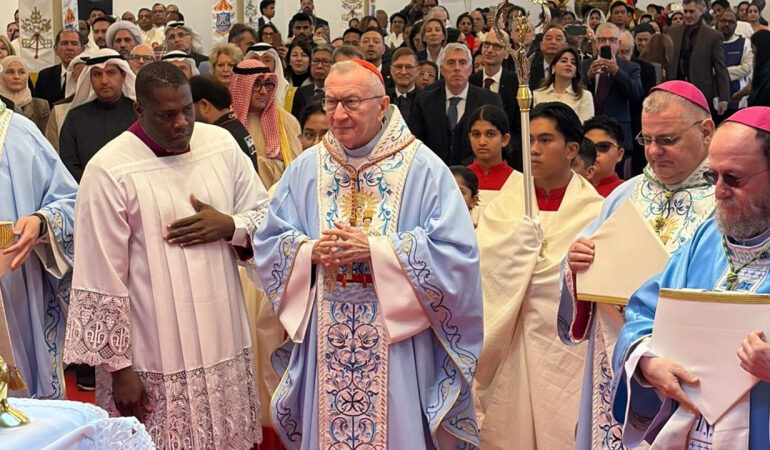

Kuwait’s oldest Catholic church has been formally elevated to the status of a Minor Basilica, marking a significant moment for the Christian presence in the Gulf region and the wider Arabian Peninsula. The Church of Our Lady of Arabia, located in Ahmadi, received the designation during a solemn Mass presided over by Cardinal Pietro Parolin, signaling a rare and symbolic recognition by the Holy See. The decision places the church among a small number of basilicas in predominantly Muslim countries and reflects decades of pastoral continuity in a region shaped by migration and economic transformation. Built originally to serve foreign Catholic workers arriving during the expansion of Kuwait’s oil industry, the church has grown alongside the country itself. Vatican officials have described the elevation as an affirmation of the enduring spiritual life of Christian communities in the Gulf, rooted in faith rather than numbers or political influence.
The origins of the church date back to 1948, when a small group of Catholic migrants opened a modest chapel to meet their pastoral needs. As Kuwait’s oil sector expanded, the chapel was replaced by a larger church dedicated to Our Lady of Arabia, reflecting both devotion and necessity as the Catholic population increased. Over time, the church became a focal point for worship, community life, and intercultural encounter among believers from diverse backgrounds. The building, erected on desert land, has come to symbolize continuity amid change, serving generations of migrant workers far from their countries of origin. Vatican officials have noted that the church’s growth mirrors broader demographic shifts across the Gulf, where economic development has drawn millions of foreign workers who maintain their religious identity while contributing to local society under often temporary and restricted conditions.
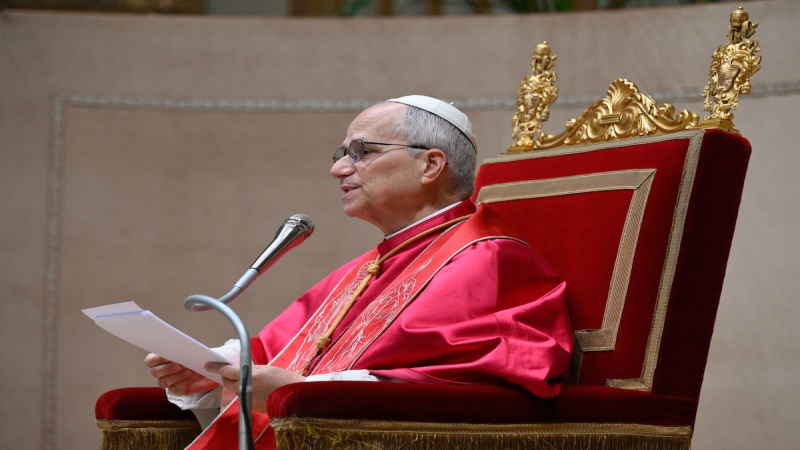
During the liturgy marking the elevation, Cardinal Parolin reflected on the theological and historical meaning of the basilica designation, describing it as a moment of shared memory and hope for the Church across the peninsula. He referred to the desert setting as a place of refuge and faith, linking it symbolically to the experience of the Holy Family and to Mary’s role as protector and guide. Addressing a congregation that included clergy, diplomats, and representatives of Kuwait’s public institutions, the Cardinal emphasized the Christian confession of Jesus Christ as both true God and true man, urging believers to bear witness to that faith through daily life. The celebration underscored the Vatican’s emphasis on spiritual presence rather than institutional power in regions where Christians live as minorities, often without citizenship or long term security.
Christians today account for roughly one fifth of Kuwait’s population, though the vast majority are migrant workers from Asia, Africa, and other parts of the Middle East. Similar demographic patterns are found across neighboring Gulf states, where economic migration has reshaped religious landscapes without altering official state identities. Kuwait and Bahrain remain notable for also having small communities of Christian citizens whose families trace their origins to Arab countries with historic Christian populations. Vatican observers see the basilica designation as a gesture of encouragement to these communities, reinforcing their sense of belonging to the universal Church. By entrusting the country and its people to the intercession of Our Lady of Arabia, Church leaders have framed the event as both pastoral and symbolic, reflecting a commitment to coexistence, faith, and quiet perseverance.