

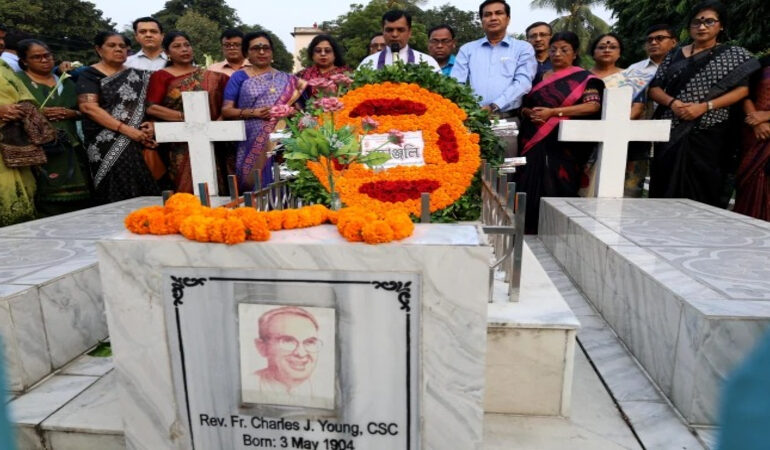

Bangladesh’s Christian community has marked another year of reflection on the remarkable legacy of Father Charles Joseph Young, the American Holy Cross priest whose work transformed the economic and social trajectory of thousands. Commemorations in Dhaka highlighted how the credit union he founded in 1955 has grown into a major national cooperative, now serving 46,000 members with more than one hundred million dollars in capital. This institution, known as Dhaka Credit, began as a small initiative to protect vulnerable Christians from predatory lending practices that trapped families in cycles of debt. Community leaders recalled that the cooperative’s growth has enabled members to invest in businesses, education and healthcare, creating generational change that continues to echo across the country. Testimonies from entrepreneurs, including women who have built independent livelihoods, underscored how the credit union’s structure provided financial access previously unavailable to marginalized groups. The anniversary observances also served as a moment for recalling Father Young’s broader approach to development, which linked economic participation with community dignity and long-term stability.
The expansion of Dhaka Credit into major social projects, including the Divine Mercy Hospital, reflects how Father Young’s vision continues to shape Christian engagement with national development. Leaders noted that more than two hundred parish-level cooperatives have been established due to his influence, forming one of the most significant faith-led economic networks in the region. His work during periods of crisis, including the 1970 cyclone and the aftermath of the 1971 War of Independence, showcased the importance of coordinated relief, training and organizational capacity in rebuilding lives. These contributions helped pave the way for Caritas Bangladesh, whose roots can be traced to structures he helped form. Father Young’s efforts extended beyond economic programs, addressing land disputes, housing needs and youth education at a time when resources were scarce and institutions were still forming. His commitment to the poorest communities, especially among the Garo tribal population, demonstrated a model of missionary presence grounded in solidarity and practical empowerment rather than dependency.
Commemorations this year also prompted renewed discussion about formally recognizing Father Young’s legacy within the Church. Leaders of the credit union movement suggested that his life offers a compelling example of service that could support a future cause for canonization, noting the lasting impact he made across religious and cultural lines. They described his approach as one that combined pastoral care with a deep understanding of the social barriers affecting minority communities in mid-twentieth-century Bangladesh. His dedication to cooperative development, inspired by studies abroad and shaped by direct experience among the poor, laid foundations that continue to support employment, education and healthcare for thousands. Those reflecting at his grave emphasized that his work spread Christian values through action rather than proclamation, strengthening trust across diverse communities. As the cooperative movement he launched continues to expand, many see his legacy as a living testament to how faith-driven initiatives can shape economic life in ways that promote resilience, dignity and shared prosperity across a rapidly changing nation.