

Lenten Retreat at the Vatican Reflects on Leadership Through St Bernard’s On Consideration
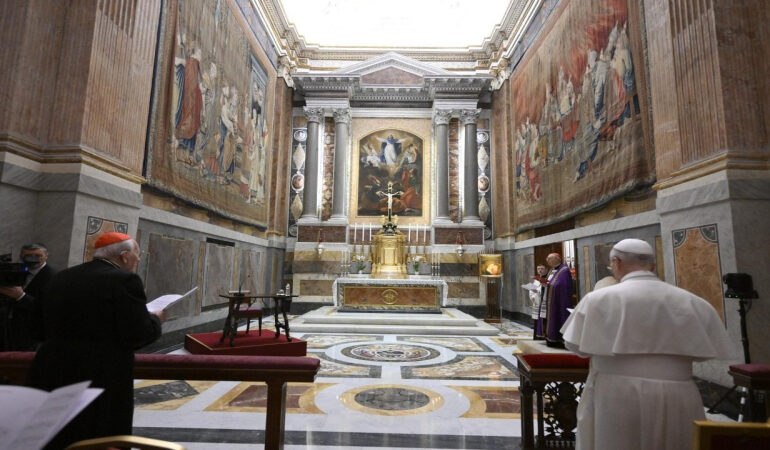

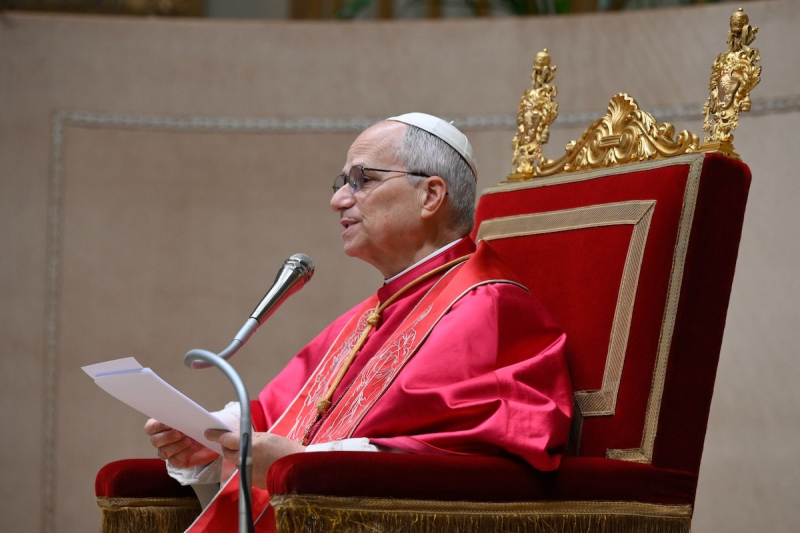
During the annual Lenten Spiritual Exercises at the Vatican, Bishop Erik Varden invited Pope Leo XIV, cardinals residing in Rome, and heads of dicasteries to reflect deeply on the meaning of leadership in the Church through the lens of St Bernard of Clairvaux’s treatise On Consideration.
The reflection, delivered as part of the retreat held for the Roman Curia, centered on a text written in the twelfth century by St Bernard to a fellow monk who unexpectedly became Pope Eugene III. Though originally a personal letter, On Consideration became one of Bernard’s most widely circulated works, offering enduring insight into ecclesial governance and spiritual responsibility.
Bishop Varden explained that Bernard distinguished between contemplation and consideration. Contemplation rests in truths already known, while consideration searches for truth within the complexities of daily life and contingent human affairs. For those entrusted with governance, especially within the Church’s central administration, this searching attentiveness is essential.
Rather than proposing structural reforms, Bernard urged the Pope to surround himself with collaborators marked by sanctity, obedience, patience, fidelity, and unity. Leadership, he suggested, depends not primarily on systems but on the moral and spiritual quality of those who serve. The better the Church’s offices are guided by prayerful and disciplined individuals, the greater the benefit for the universal Church.
Bishop Varden highlighted Bernard’s emphasis on prayer as the foundation of effective governance. Those entrusted with responsibility must place greater confidence in prayer than in personal effort. Their service should be characterized by modest speech, peaceful presence, and discreet action. In this way, the Church’s visible structures reflect a higher order oriented toward the glory of God.
The reflection also turned to the theological dimension of consideration. Bernard encouraged Pope Eugene to remember first who God is before addressing practical matters. God, described as supreme blessedness and benevolent will, creates humanity out of love and calls each person toward communion. Leaders in the Church, therefore, must ground their decisions in this vision of divine generosity and purpose.
Drawing on St Augustine, Bishop Varden acknowledged the weight of episcopal office. Augustine once compared it to a soldier’s burden carried across difficult terrain. Yet this burden becomes light when embraced in love, as a participation in Christ’s own yoke. Authority, seen in this light, is not domination but service.
For those entrusted with governance, whether at the local or universal level, the task is to carry what has been entrusted to them faithfully, remembering that all authority is ultimately a deposit belonging to Christ. In the context of Lent, Bishop Varden’s meditation called Church leaders to return continually to prayerful discernment, humility, and a renewed awareness that every administrative responsibility must serve the Church’s principal mission of giving glory to God.