

Leo XIV Introduces New Papal Staff Rooted in Continuity
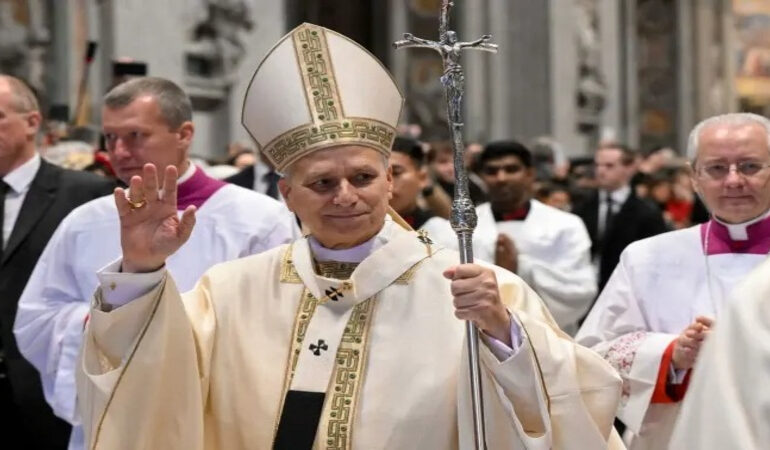

During the closing of the Holy Door at St. Peter’s Basilica on January 6, Pope Leo XIV quietly introduced a new papal staff, known as the ferula, signaling continuity with tradition while articulating the theological priorities of his pontificate. Used exclusively by the Bishop of Rome during solemn liturgical celebrations, the papal ferula symbolizes the Pope’s role as universal pastor and guardian of ecclesial unity. While distinct from the curved crozier carried by bishops, the ferula bears a cross or crucifix and has long functioned as a visible expression of papal authority exercised in service. The decision to unveil a new staff at a major Jubilee moment placed the object within the wider context of renewal, continuity, and responsibility that has marked Leo XIV’s early months as pontiff.
According to Vatican liturgical practice, popes traditionally receive a ferula following their election when formally taking possession of the See of Rome. Over the past six decades, the design and symbolism of the papal staff have evolved while retaining a strong sense of historical memory. Saint Paul VI set a modern precedent in 1965 by adopting a silver ferula designed by Italian sculptor Lello Scorzelli, featuring a crucified Christ marked by suffering yet open to resurrection. That design became one of the most recognizable symbols of late twentieth century papal liturgy and was later used frequently by Saint John Paul II, who relied on it even during periods of physical frailty. The ferula thus became associated not only with authority but also with endurance and witness.
Pope Leo XIV’s newly introduced ferula reflects this lineage while offering its own theological emphasis. Vatican officials have explained that its design evokes Scorzelli’s artistic language but depicts Christ no longer bound by the nails of the Passion. Instead, the figure suggests a glorified body rising toward the Father, visually linking the mystery of the Cross with the hope of the Resurrection. This iconographic choice underscores a vision of the papal ministry rooted in sacrifice but oriented toward redemption and life. By drawing from established forms rather than breaking sharply from them, the new ferula situates Leo XIV within a recognizable liturgical continuity while subtly articulating his spiritual focus.
The papal staff also bears the personal motto chosen by the Pope, In illo uno unum, translated as “In the one Christ we are one.” The inscription highlights unity and communion as central themes of his magisterium and reflects a broader ecclesiological vision shaped by shared faith rather than division. The ferula, carried during the most solemn moments of worship, becomes a visual catechesis, expressing the Pope’s mission to confirm believers in faith and preside over the Church in charity. Its introduction, while understated, signals how symbols continue to play a meaningful role in shaping the language of the papacy in the modern Church.