New Episcopal Appointment in Xinxiang Marks a Measured Step in Vatican China Relations
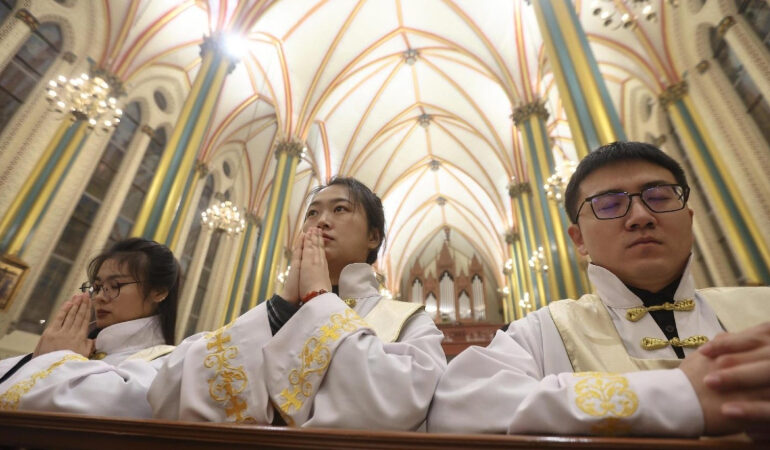

The consecration of Bishop Francis Li Jianlin in the Apostolic Prefecture of Xinxiang has drawn renewed attention to the evolving dynamics between the Holy See and China at a time when diplomatic cooperation and pastoral necessity continue to intersect. His ordination on 5 December reflects both the administrative continuity of the local Church in Henan and the ongoing implementation of the Provisional Agreement that outlines how episcopal appointments are coordinated. While the agreement remains limited in transparency and scope, this appointment demonstrates that its operational mechanisms still function under the current papacy, providing a controlled framework for selecting candidates whose profiles balance pastoral experience, community familiarity, and broader ecclesial alignment. The appointment also followed the resignation of Bishop Joseph Zhang Weizhu, whose departure closed a complex chapter for the prefecture after extended periods of unclear governance. The event therefore represents an administrative reset shaped by long term considerations of stability rather than short term political optics.
Bishop Li’s background provides insight into why he was considered a steady choice for a region that requires consistency in pastoral oversight and disciplined formation work. Raised in a Catholic family in Henan and ordained in 1999, he has spent nearly his entire ministry within the same prefecture, taking on responsibilities that range from parish leadership to the formation of seminarians and religious communities. His years directing formation programs and later serving as parish priest in Jiaozuo positioned him as a figure with both spiritual and administrative grounding, traits that often weigh heavily when selecting clergy for diocesan governance in areas where external pressures and internal pastoral demands coexist. His longevity in localized service also suggests that the Holy See views deeply rooted pastoral presence as a stabilizing factor when evaluating appointments under the specific conditions present in mainland China.
The timing of the consecration carries broader significance for observers who track developments in Vatican China relations, since each episcopal appointment functions as a mild indicator of the agreement’s durability and the extent to which both sides maintain their commitment to negotiated processes. Although the arrangement remains provisional and periodically questioned by international analysts, this latest appointment signifies that both parties continue to engage in practical cooperation where ecclesial governance aligns with local regulatory expectations. For Vatican analysts, the smooth execution of this ordination will likely be read as a sign of incremental progress in an environment where consensus is seldom rapid. For Catholic communities in Henan, however, the event holds a more immediate pastoral meaning, offering clarity and renewed leadership at a time when local structures benefit from a clearly mandated shepherd.