
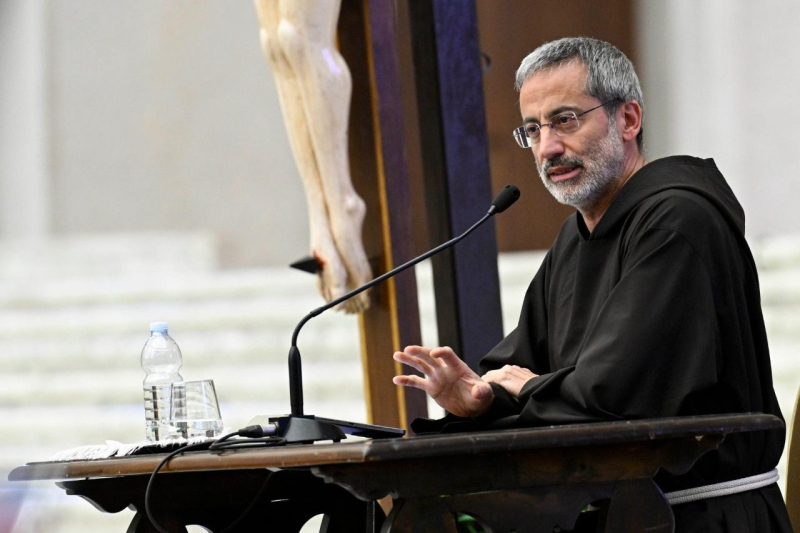
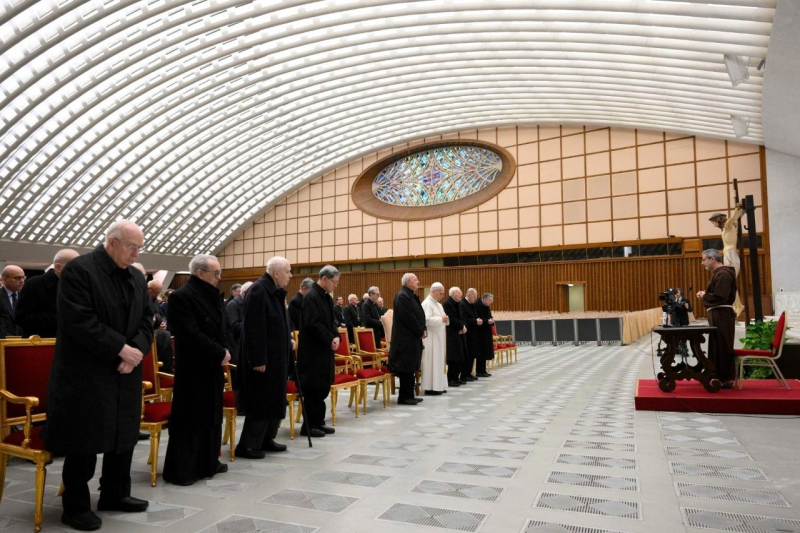
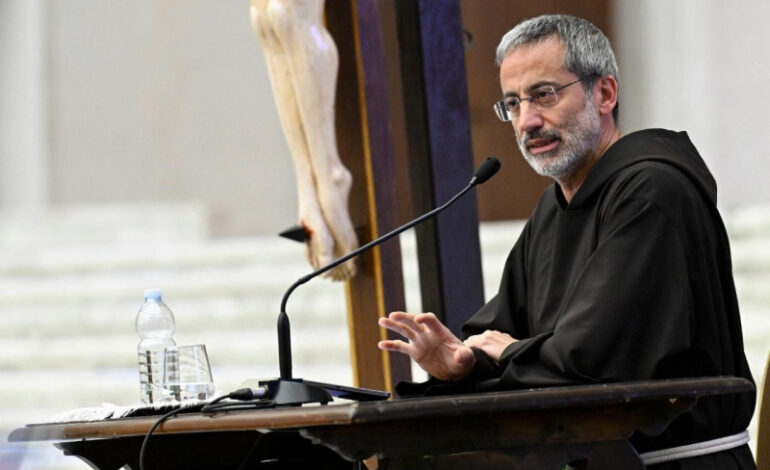

Fr. Roberto Pasolini, the Preacher of the Papal Household, has reflected on the spiritual themes guiding the Vatican’s Lenten sermons this year, emphasizing that peace grows from the humble power of love even amid global tensions and conflict. The Capuchin friar began delivering the weekly Lenten meditations on March 6 in the presence of Pope Leo XIV and members of the Roman Curia. The reflections will continue each Friday until March 27 before the beginning of Holy Week. The series draws inspiration from the biblical message that those who are in Christ become a new creation, exploring the path of conversion through the example of Saint Francis of Assisi.
Fr. Pasolini explained that the decision to focus on Saint Francis carries particular significance this year as the Church commemorates the eight hundredth anniversary of the saint’s death. The Franciscan figure, known for his humility, simplicity and deep commitment to the Gospel, offers a powerful model for spiritual renewal. According to the papal preacher, the life of Saint Francis demonstrates that authentic conversion is not merely a personal effort but a transformation that begins when individuals allow the message of the Gospel to shape their daily lives. Through humility, freedom and fraternity believers can rediscover a deeper relationship with God and with others.
Reflecting on the broader context of the world today, the preacher acknowledged that many people find it difficult to maintain hope amid wars, political tensions and social uncertainty. He said Christian hope is often fragile because it bears the mark of the cross, combining both suffering and light. In the Christian vision God chooses to guide the world not through domination or force but through love that respects human freedom. Because of this choice the path toward peace is often slow and requires individuals and communities willing to embrace reconciliation rather than retaliation.
Fr. Pasolini also noted that the message of the Gospel cannot be separated from real life and its challenges. Faith, he explained, is not an abstract ideal disconnected from the struggles of society. When the Gospel truly influences a person’s life it changes attitudes and relationships, gradually transforming the surrounding community as well. He suggested that the quiet work of goodness often grows unnoticed while the noise of violence and conflict dominates public attention. Yet the gradual growth of compassion justice and solidarity remains an essential part of building a more peaceful world.
Another theme highlighted in his reflections concerns the importance of responsible communication during times of tension. The preacher observed that violence does not appear only on battlefields but also in the way people speak to one another. Harsh language careless remarks and a lack of listening can deepen divisions within communities. According to him genuine dialogue requires patience humility and a willingness to understand the perspective of others. Words should be chosen with care and spoken with respect especially when individuals hold positions of influence or authority.
Looking again to Saint Francis as a guide for contemporary society, Fr. Pasolini said the saint remains relevant because he reminds people that God is alive and present in everyday life. The Franciscan tradition calls believers to rediscover the simplicity of the Gospel and to build relationships rooted in fraternity and gratitude for creation. At a time when religious faith can sometimes be reduced to moral obligation or cultural identity, the example of Saint Francis invites individuals to encounter God in a living and transformative way that shapes how they treat others and how they view the world around them.