
Polish and German Bishops Renew Commitment to Reconciliation After 60 Years
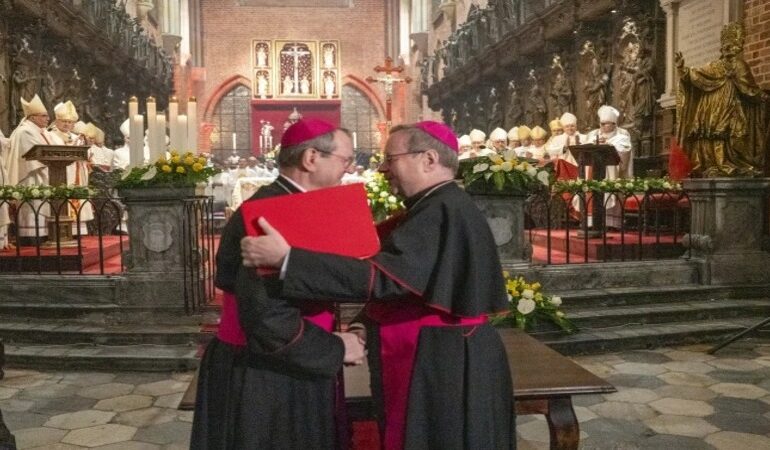

Polish and German bishops marked the sixtieth anniversary of their historic postwar reconciliation by gathering in Wrocław to reaffirm a shared commitment to unity, dialogue and responsibility for Europe’s future. The original 1965 exchange of letters, in which Polish bishops famously declared “We grant forgiveness and ask for forgiveness” and the German episcopate responded with an appeal to overcome hatred, remains one of the most significant gestures of healing in modern European Church history. Delegations from both conferences, led by Archbishop Tadeusz Wojda and Bishop Georg Bätzing, commemorated the anniversary at the monument to Cardinal Bolesław Kominek, the architect of the original reconciliation initiative. Speakers emphasized how Kominek’s vision joined moral clarity with pastoral realism, and how his commitment to building bridges across nations laid foundations for decades of cooperation. Today’s leaders acknowledged that the message of reconciliation still encounters opposition, yet argued that the ongoing relevance of the gesture must be carried forward through actions that reflect truth, forgiveness and responsibility within a rapidly changing European landscape.
The commemoration included a Mass at the Cathedral of St. John the Baptist, followed by an exhibition, ecumenical prayer and an international conference examining the enduring significance of reconciliation for Europe. Participants reflected on the challenges that shaped the original letters, including wartime trauma, political division and the ideological constraints imposed by communist authorities. Archbishop Józef Kupny described the 1965 letter as a visionary step that continues to provoke debate, reminding contemporary communities that reconciliation demands courage, patience and a willingness to confront difficult historical memories. Bishop Bätzing highlighted Kominek’s unique ability to navigate national identity and cross-cultural understanding, noting that his deep knowledge of German culture allowed him to advance pathways to peace during a period marked by distrust. Present-day leaders emphasized that reconciliation cannot remain a symbolic gesture confined to history, but must shape everyday decisions and guide the Church’s engagement with the broader political and social environment.
At the conclusion of the anniversary events, both conferences signed a new declaration titled “Courage of Extended Hands,” which reaffirms the enduring relevance of the 1965 message. The text emphasizes that Poland and Germany share responsibility for safeguarding peace in Europe and upholding the principles of justice, cooperation and mutual respect. The bishops expressed concern over current geopolitical tensions, particularly the ongoing conflict in Ukraine, and urged European countries to uphold fundamental values while offering practical solidarity to those under attack. They emphasized that reconciliation requires sustained commitment, not only between nations but within communities facing new divisions and challenges. The renewed declaration signals the determination of both Churches to continue strengthening unity, supporting peace efforts and ensuring that the legacy of forgiveness shapes European cooperation for future generations.