

Pope Leo Highlights Lebanon’s Role As Model Of Faithful Coexistence
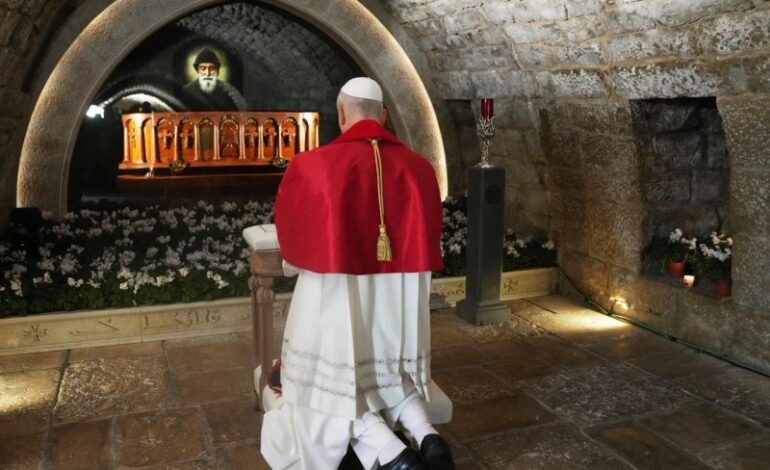

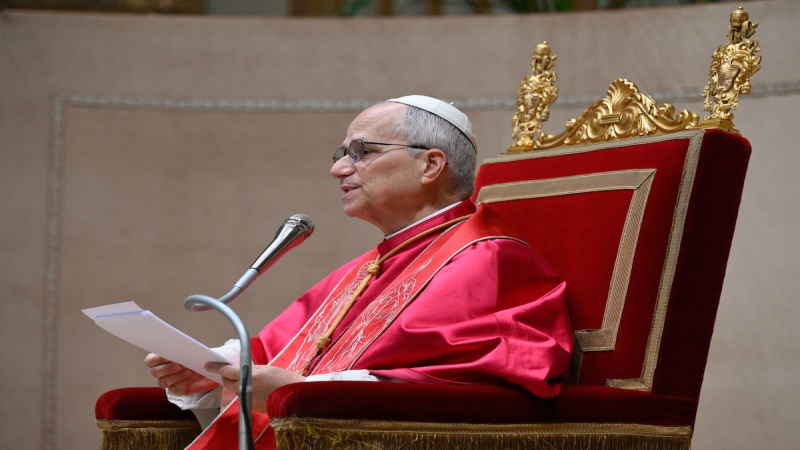
Pope Leo’s second day in Lebanon featured a strong appeal for unity as he described the country as a living example of tolerance, urging Christian, Muslim and interfaith leaders to continue building a shared foundation for peace in a region often shaped by religious tension. His remarks, delivered in Beirut’s Martyrs’ Square near a mosque and within view of historic Christian institutions, emphasized the responsibility of faith communities to confront intolerance and strengthen bonds of mutual respect. The pope underscored that every form of prayer, whether a church bell or an adhan, should aspire toward justice and concord grounded in spiritual conviction. Earlier in the day, he visited the tomb of Saint Charbel Makluf, a deeply venerated figure in Lebanese Christianity, before meeting bishops, clergy and religious representatives who serve diverse communities across the country. Observers noted that the pope’s tone reflected a desire to reinforce the theological principles that guide dialogue across traditions and reaffirm the shared heritage connecting Christians, Jews and Muslims.
His visit coincides with the 1700th anniversary of the Council of Nicaea and the 60th anniversary of Nostra Aetate, moments in Church history that formalized commitments to doctrinal clarity, respect for other religions and ecumenical engagement. Multiple patriarchs and Christian leaders present at the gathering described the pope as a brother to all humanity and expressed hope that his presence would renew efforts toward lasting stability in Lebanon. They stressed the longing of people across the Middle East for constructive peace, political security and an environment where religious and cultural identities coexist without hostility. Pope Leo echoed these aspirations by recalling teachings from Ecclesia in Medio Oriente, written by Pope Benedict XVI, which highlighted that authentic dialogue arises not from political calculation but from theological truth rooted in faith. He stressed that Lebanon’s capacity to maintain coexistence despite its challenges demonstrates that unity is possible even in environments shaped by conflict and upheaval.
The pope’s reflections highlighted the spiritual symbolism deeply rooted in Lebanese culture, particularly the image of the olive tree, which represents peace, reconciliation and endurance across Christianity, Judaism and Islam. He stated that its resilience mirrors the perseverance required to sustain coexistence and reaffirmed that faith based dialogue must be grounded in love, dignity and the rejection of prejudice. Religious leaders together planted an olive tree as a public sign of their common commitment to reconciliation and hope. Pope Leo concluded his remarks with a prayer to Our Lady of Lebanon, asking for guidance so that peace may flow throughout the Middle East like the streams of Lebanon itself. His message underscored that while conflicts across the region have produced fear and disheartenment, shared humanity and belief in divine mercy remain unifying forces. For many Lebanese observers, the visit reinforced the importance of faith and doctrine as tools for healing, bridge building and nurturing long term coexistence.