
Pope Leo Urges Renewed Joy in Passing on the Faith
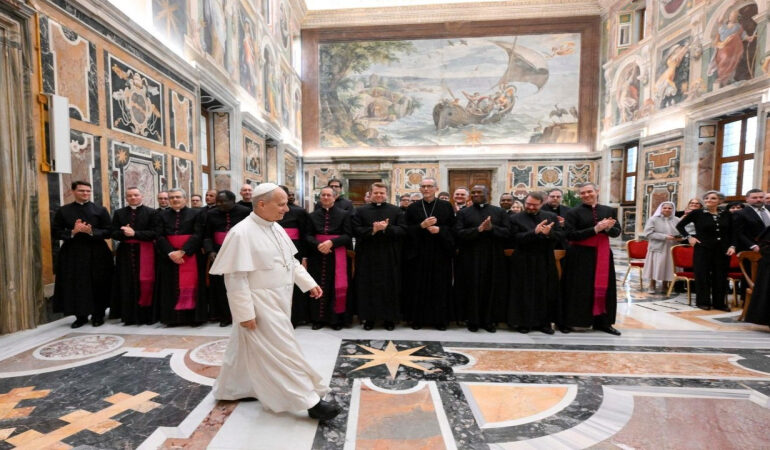

Pope Leo XIV told members of the Dicastery for the Doctrine of the Faith that the transmission of the Catholic faith has become an urgent priority in the present moment, as he addressed their plenary assembly at the Vatican on Thursday. Greeting officials and consultors, the Pope acknowledged the Dicastery’s role in assisting the Roman Pontiff and bishops in proclaiming the Gospel while safeguarding the integrity of Catholic teaching. He noted that their work involves engaging the deposit of faith with intellectual rigor and pastoral sensitivity, especially as new questions emerge within contemporary society. Pope Leo expressed appreciation for the doctrinal and theological guidance offered by the Dicastery in recent years, describing it as a service that supports both the faithful and Church leadership in navigating a period of profound cultural and historical change.
Reflecting on the theme discussed during the plenary assembly, Pope Leo focused on what he described as a rupture in the generational transmission of the faith, particularly in regions with long Christian traditions. He observed that growing numbers of people, especially among younger generations, no longer perceive the Gospel as a meaningful reference for their lives. While acknowledging the sorrow this reality causes within the Church, the Pope stressed that it must not lead to discouragement or inward retreat. Instead, he said, it should prompt a renewed discovery of the joy of evangelization, which lies at the heart of the Church’s identity and mission. He recalled recent discussions among cardinals emphasizing the need for a Church that looks outward, remaining missionary rather than self-referential.
Pope Leo further reflected on the manner in which the Church proclaims the Gospel, reiterating that faith is transmitted not primarily through argument or authority, but through attraction. Echoing themes emphasized by previous pontiffs, he underlined that it is Christ who draws people, not ecclesial structures or personalities. When Christian communities become places of authentic charity, he said, they allow the love flowing from Christ to be visible and accessible. Within this vision, the Pope stressed that every believer and Church institution must resist protagonism, recognizing themselves as humble workers serving a mission that does not originate from them. Such humility, he explained, preserves the credibility of the Church’s witness and allows the Gospel to be encountered as a living reality.
Before concluding, Pope Leo addressed another aspect of the Dicastery’s responsibility, namely its role in handling cases involving serious offenses reserved to its competence. He described this area of service as particularly delicate, requiring discernment, fairness and pastoral care. The Pope emphasized that the pursuit of justice must always be united with truth and charity, ensuring that all involved are treated with dignity. He thanked the Dicastery’s members for carrying out this demanding work, often discreetly and unobtrusively, and acknowledged the burden it places on those entrusted with such responsibilities. Pope Leo concluded by renewing his gratitude for their service to the Church and imparted his apostolic blessing, encouraging them to continue their mission with fidelity and quiet dedication.