
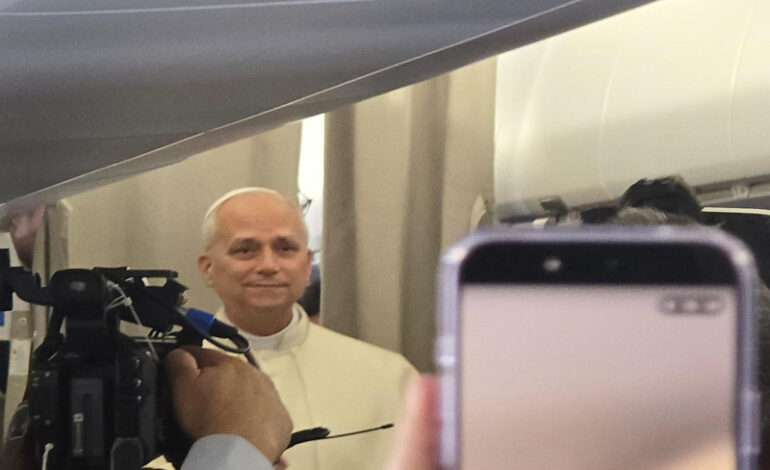

Speaking to journalists aboard the return flight from Lebanon, Pope Leo addressed a wide range of geopolitical and ecclesial concerns, offering a pointed reflection on the rise of fear-based narratives surrounding Islam in Western nations. He noted that anxieties among Christians in Europe and North America surfaced regularly in his recent conversations with leaders in Turkey and Lebanon, but argued that these sentiments are often shaped less by theological tension and more by political efforts to resist immigration. According to the pope, groups promoting restrictive policies frequently invoke concerns about cultural displacement or religious conflict, creating an atmosphere that discourages acceptance of migrants and refugees from Muslim-majority regions. He highlighted Lebanon’s model of coexistence as a valuable example, insisting that testimonies of cooperation between Christians and Muslims illustrate the potential for genuine friendship and shared civic responsibility. As part of his broader message, he encouraged Western societies to scrutinize the motivations behind public discourse and to prioritize sustained dialogue, drawing attention to the need for communities to approach interreligious engagement with openness rather than apprehension.
During the in-flight discussion, the pope also commented on multiple global conflicts, emphasizing the Vatican’s ongoing behind-the-scenes efforts to encourage diplomatic conversations in Lebanon, Ukraine and Venezuela. He confirmed that he has already initiated small-scale exchanges with political leaders in the United States and Israel, stating that the Holy See intends to continue urging all parties to move toward nonviolent solutions. Pope Leo reiterated the Holy See’s position that effective peacebuilding requires a willingness to abandon aggressive strategies and recognize how military action disproportionately harms civilians. Addressing a question about Europe’s role in Ukraine negotiations, he acknowledged that earlier diplomatic plans excluded European leaders but noted that subsequent revisions reflected European concerns over economic and security implications. He added that Italy may serve as an important mediator in the months ahead, as it maintains workable relationships with all primary actors. In discussing Venezuela, he repeated his view that dialogue and well-structured pressure offer more constructive paths than military intervention, emphasizing that those most affected by instability are ordinary citizens rather than political authorities.
The pope also reflected on tensions within the German church, explaining that disagreements surrounding the national Synodal Way require patience, transparency and mutual respect. He said the global church has space for diverse expressions of synodality as long as these remain in communion with the wider Catholic tradition and allow all voices to be heard. He discouraged speculation about schism and stressed that distinctions in local practice do not necessarily indicate division. Turning briefly to his own experience of the papacy, he referenced his long-standing spiritual focus on trusting divine guidance, a theme that continues to shape his approach to leadership. Pope Leo concluded by saying that future travel may include visits to Africa or Latin America, noting that interfaith engagement and pastoral accompaniment remain central priorities for his pontificate.