Pope Leo XIV Condemns Human Trafficking and Warns of Growing Threat of Modern and Digital Slavery
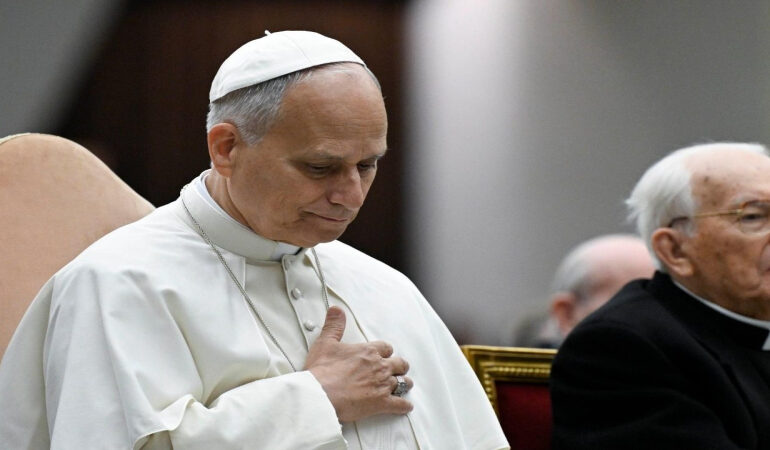

Ahead of the 12th World Day of Prayer and Awareness against Human Trafficking, Pope Leo XIV has issued a strong condemnation of modern slavery, describing human trafficking as a grave crime against humanity that continues to evolve in alarming ways. In a message released ahead of the observance on 8 February, the Pope reaffirmed the Catholic Church’s commitment to confronting trafficking in all its forms and standing with victims across the world.
Reflecting on the words of the Risen Christ, “Peace be with you,” Pope Leo said authentic peace can only be built on respect for the God given dignity of every human being. He warned that in a world increasingly shaped by violence and conflict, peace is often wrongly pursued through force, domination, and weapons rather than justice and compassion.
According to the Pope, this distorted pursuit of peace leads to the devaluation of human life. Civilians, he said, are frequently treated as expendable, sacrificed for political, military, or economic interests. This same disregard for human dignity, he noted, lies at the heart of human trafficking, particularly in regions affected by war, instability, and forced displacement.
Pope Leo emphasized that armed conflicts and geopolitical tensions create ideal conditions for traffickers, who exploit people fleeing violence and poverty. Women and children, he said, remain the most vulnerable, bearing the greatest burden of exploitation, abuse, and coercion within trafficking networks.
He also drew attention to the rise of what he described as cyber slavery, a growing form of exploitation in the digital age. Through online manipulation, false job offers, and criminal networks operating on digital platforms, individuals are drawn into activities such as fraud and drug trafficking. In many cases, victims are forced to participate in crimes, deepening their psychological and spiritual trauma.
This phenomenon, the Pope explained, reflects a broader cultural crisis. These acts of violence are not isolated events, but symptoms of a society that has forgotten how to love with selflessness and responsibility. When profit, power, and control take precedence over human dignity, exploitation becomes normalized.
In response, Pope Leo called on Christians and people of goodwill to turn to prayer and awareness as essential tools in confronting trafficking. Prayer, he said, acts as a small but powerful flame that sustains hope and strengthens resistance to injustice and indifference. Awareness, meanwhile, allows communities to recognize exploitative systems, both in physical environments and in digital spaces.
The Pope stressed that human trafficking can only be overcome through a renewed vision of humanity, one that recognizes every person as a beloved child of God. Such a vision, he said, challenges societies to protect the vulnerable and reject systems that profit from suffering.
Pope Leo also expressed gratitude to organizations, church networks, and individuals working on the front lines to support victims, many of whom are survivors themselves. Their work, he said, is a sign of hope and a concrete witness to compassion in action.
In closing, he entrusted the World Day of Prayer and Awareness against Human Trafficking to the intercession of Saint Josephine Bakhita, whose life stands as a powerful testimony to faith, resilience, and freedom. He urged the global community to pursue a vision of peace rooted not in force, but in unarmed respect for the dignity of every human person.