
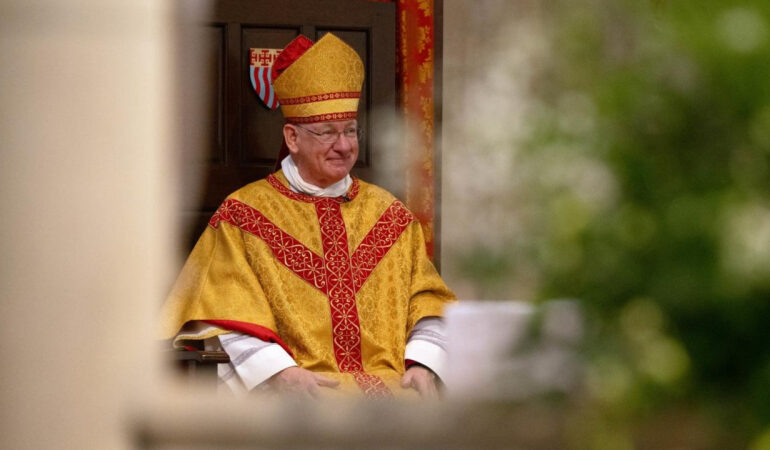

Pope Leo XIV has accepted the resignation of Cardinal Vincent Gerard Nichols from the pastoral governance of the Metropolitan Archdiocese of Westminster and has appointed Archbishop Richard Moth as his successor. The decision, announced by the Holy See Press Office, marks a significant transition for the Catholic Church in England, as Westminster remains one of the most prominent sees in the country and a focal point for relations between the Church, society, and public life. Cardinal Nichols has led the archdiocese for more than a decade, guiding it through periods of institutional reform, public scrutiny, and changing social attitudes toward religion. With the appointment of Archbishop Moth, Pope Leo XIV signals continuity combined with renewed pastoral leadership at a moment when the Church in Britain continues to navigate questions of identity, mission, and engagement in an increasingly secular context.
Archbishop Richard Moth brings extensive pastoral, legal, and administrative experience to his new role. Born in 1958 in Chingola, Zambia, he was educated in Catholic schools in Kent before undertaking priestly formation in Surrey and advanced canonical studies in Canada. Ordained a priest for the Archdiocese of Southwark in 1982, he went on to serve in a wide range of responsibilities, including tribunal work, parish ministry, and senior administrative roles. His background includes service as Vicar General of Southwark and President of its Metropolitan Tribunal, as well as work in vocational formation and liturgical coordination. These roles shaped his reputation as a churchman attentive to both pastoral care and institutional governance, qualities considered increasingly important in episcopal leadership.
In 2009, Archbishop Moth was appointed Military Ordinary for Great Britain, a position that placed him in close contact with pastoral challenges linked to service members and their families. He received episcopal consecration later that year before being transferred in 2015 to the Diocese of Arundel and Brighton, where he has served for nearly a decade. His tenure there was marked by attention to diocesan organization, clergy support, and engagement with lay communities. As Archbishop of Westminster, he now assumes responsibility for a diocese with national and international visibility, encompassing London and its surrounding areas. The appointment reflects Pope Leo XIV’s broader approach to episcopal leadership, emphasizing pastoral experience, legal competence, and steady governance as the Church continues to respond to social change and internal renewal.