
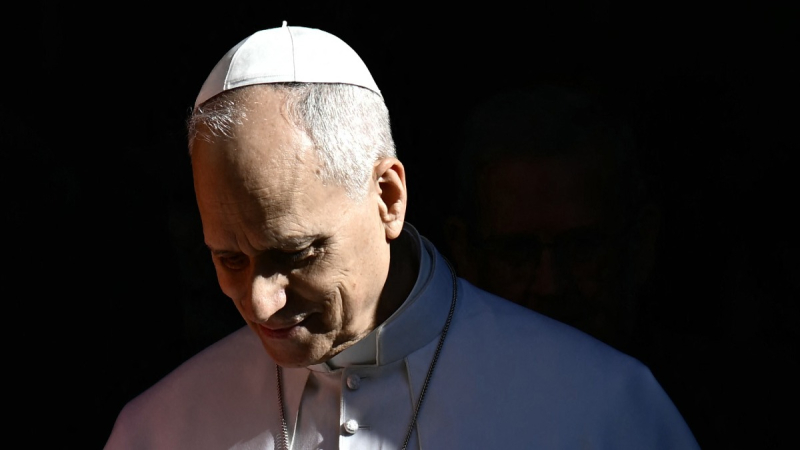

Seven months into his pontificate, Leo XIV is preparing to lead his first Christmas celebrations, framing the season around peace as both a spiritual appeal and a public gesture. His Christmas message, drawn from St Leo the Great, describes the Nativity as inseparable from peace, a theme that has steadily defined his early papacy. The greeting, distributed through the Prefecture of the Papal Household, reflects a deliberate effort to root his message in continuity while addressing present instability. In recent remarks to journalists, the Pope urged people of goodwill to respect at least one full day of peace on Christmas, echoing his first public words from the loggia of St Peter’s Basilica after his election. The appeal signals a pastoral approach that links liturgy, public conscience, and global responsibility.
The liturgical calendar prepared for this Christmas marks several notable shifts in Vatican practice. On the evening of December 24, the Pope will preside at Midnight Mass in St Peter’s Basilica, opening the solemn celebrations of the Nativity. The procession to the Nativity scene will include children from multiple continents, a symbolic gesture reflecting the universal scope of the Church and the global impact of conflict. On Christmas Day, he will celebrate Mass again in the Vatican Basilica, restoring a practice not observed by his immediate predecessors and last carried out by John Paul II in the mid 1990s. Later that day, he will deliver the traditional Urbi et Orbi blessing, positioning Christmas not only as a liturgical feast but as a moment of shared global address.
The days following Christmas continue this rhythm of prayer and public presence. On the feast of St Stephen, the Pope will recite the Angelus in St Peter’s Square, repeating the prayer again on the Sunday that follows. The final day of the year will include a general audience in the morning, a rare occurrence not seen since the 1970s, and an evening celebration of Vespers and the Te Deum in thanksgiving for the year that has passed. These events highlight an emphasis on continuity, remembrance, and accountability as the calendar turns. Rather than limiting Christmas to a single moment, the schedule extends its meaning across days marked by prayer, reflection, and engagement with the faithful gathered in Rome.
The transition into January carries both symbolic and institutional weight. On January 1, the Solemnity of Mary Mother of God, the Pope will celebrate Mass for the World Day of Peace, reinforcing the central theme that has shaped his Christmas message. The liturgical period will culminate with the Solemnity of the Epiphany, when the Holy Door of St Peter’s Basilica will be closed, formally concluding the Jubilee year. The season will end with the Feast of the Baptism of the Lord, celebrated in the Sistine Chapel with the baptism of children. Together, these moments frame Christmas as a passage from proclamation to practice, linking peace, worship, and the public mission of the Church.