Pope Leo XIV Scales Back Media Engagement as Vatican Adjusts Its Public Messaging
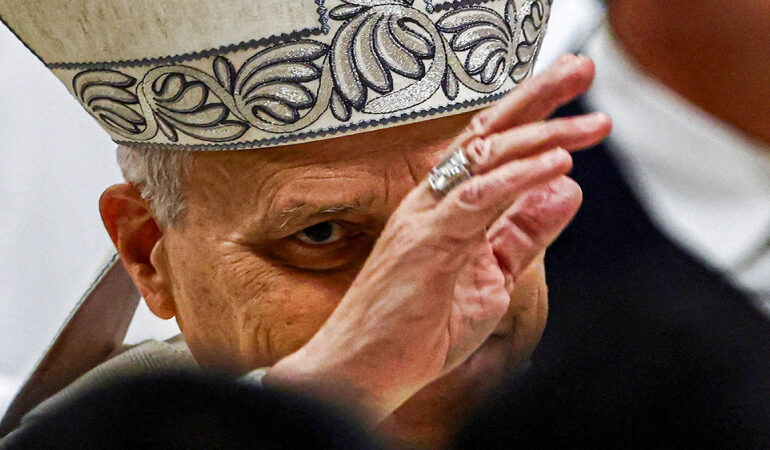

In the early weeks of 2026, Pope Leo XIV appeared frequently in headlines, offering spontaneous and often pointed comments to journalists on global and political issues. From peace initiatives to migration and U.S. domestic debates, his informal exchanges with the press quickly shaped public perceptions of his pontificate. In recent weeks, however, that approach has noticeably shifted, with the Pope stepping back from direct engagement with reporters.
After closing the Holy Year initiated by his predecessor, convening cardinals in Rome, and delivering one of his strongest appeals for peace to date, Pope Leo XIV has grown quieter in the public news cycle. For many Catholics, especially in the United States, this has meant fewer English language papal remarks circulating on television and social media.
During the first months of his pontificate, Pope Leo regularly spoke with journalists after retreats at Castel Gandolfo, sometimes addressing current events on a near weekly basis. Those brief encounters produced remarks on issues ranging from U.S. immigration policy to domestic legislation on assisted suicide. They often found their way into mainstream coverage and positioned the Pope as an active moral voice responding to unfolding events.
That pattern has changed. The Pope’s most recent encounter with reporters on January 27 consisted of a short walk by in which he simply urged prayers for peace. His previous direct engagement with the press took place more than a month earlier, in late December. Since then, major international developments have unfolded without direct comment from the Pope, including heightened geopolitical tensions and controversial law enforcement actions in the United States.
This shift has created what observers describe as a messaging gap from the Holy See. In practice, that space has been filled by Cardinal Pietro Parolin, who has increasingly addressed reporters on the sidelines of Vatican events. In recent weeks, Parolin has commented on global tensions, expressed concern over unrest in Iran, and criticized the handling of protests linked to immigration enforcement in the United States.
Such an arrangement is not unprecedented. During the pontificate of Pope Francis, the Vatican secretary of state frequently served as the institutional voice on diplomatic matters. At the same time, Francis himself was known for dramatic gestures and direct appeals that carried strong symbolic and political weight, making him a central communicator in his own right.
By contrast, Pope Leo’s pullback suggests an effort to avoid turning the papacy into a source of constant commentary on the daily news cycle. Vatican analysts note that limiting off the cuff remarks may reflect a desire for greater message discipline or a clearer separation between the Pope’s spiritual role and political analysis.
Despite the reduced press interaction, Pope Leo has not withdrawn from public engagement altogether. In recent Angelus and post Angelus remarks, he has addressed situations in Venezuela, warned against a renewed global arms race, and repeatedly condemned attacks on civilian infrastructure in Ukraine. These statements indicate ongoing attention to world affairs, even if delivered in more formal and controlled settings.
What has prompted the shift remains open to interpretation. It may signal guidance from the Secretariat of State, or it may reflect the Pope’s own evolving understanding of how he wishes to exercise his voice as global pastor. In a book interview published last year, Pope Leo acknowledged that while he has always followed current events closely, the responsibilities of the papacy were new territory.
Several months into his pontificate, it appears that Pope Leo XIV is still defining how often and in what manner he will enter public debate. His quieter approach may reshape expectations of papal communication, emphasizing reflection and prayer over immediacy, even as the world continues to look to Rome for moral guidance.