
Pope Leo XIV Signals a Governance Reset as the Vatican Enters a New Moral Chapter
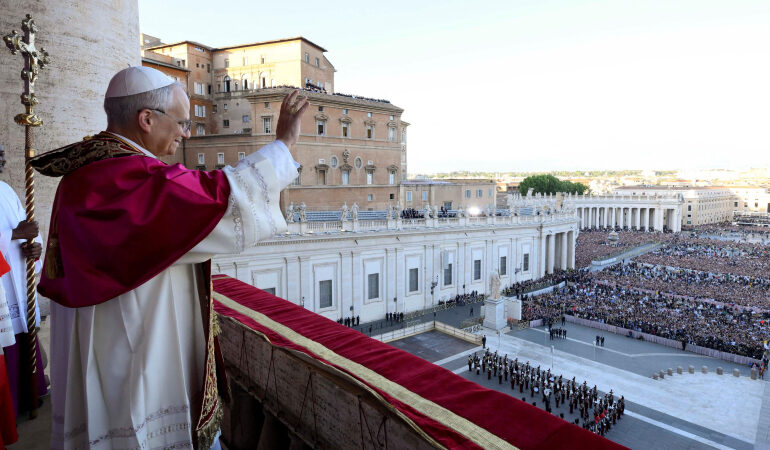

The opening weeks of Pope Leo XIV have drawn attention not for dramatic symbolism or sweeping declarations, but for a quiet recalibration of leadership within the Vatican. At a time when global institutions face growing skepticism, the new pontificate has adopted a restrained and methodical tone. Rather than emphasizing personality or public spectacle, Pope Leo XIV has focused on structure, responsibility, and moral credibility.
This early posture suggests a deliberate governance reset. The Vatican is being repositioned as a center of moral stewardship rather than political commentary. Through measured language and institutional focus, the pope is signaling that authority within the Church flows from accountability and trust, not visibility. For a global Catholic community navigating uncertainty, this approach reflects a desire for stability grounded in principle.
Re-centering Governance on Moral Stewardship
The most defining feature of Pope Leo XIV’s leadership so far has been his emphasis on governance rooted in moral stewardship. Rather than introducing immediate reforms through high profile announcements, he has prioritized reinforcing existing structures with clearer expectations. This reflects a belief that renewal begins with responsibility, not rhetoric.
Governance under Pope Leo XIV appears focused on restoring confidence in leadership at every level of the Church. Bishops are being reminded of their pastoral and administrative duties, while Vatican offices are encouraged to operate with clarity and restraint. This approach emphasizes that moral authority is sustained through integrity in process, not assertion of power.
By shifting attention away from centralized personality driven leadership, the pope has underscored that the Church’s strength lies in its institutions when they function transparently. This recalibration seeks to align governance with the Church’s spiritual mission rather than external pressures.
Administrative Discipline and Institutional Credibility
Administrative discipline has emerged as a central theme of the new pontificate. Pope Leo XIV has signaled that effective governance depends on consistency, professionalism, and ethical clarity within Vatican operations. This includes refining internal communication and reinforcing accountability without public confrontation.
The focus on discipline reflects awareness that credibility is built quietly. After years of heightened scrutiny, the Vatican’s leadership culture is being shaped toward predictability and coherence. Decisions are framed as institutional rather than personal, reducing ambiguity and reinforcing trust.
This disciplined approach also supports long term stability. By avoiding abrupt shifts, the pope allows reforms to take root organically. Administrative clarity becomes a means of restoring confidence both within the Church and among observers worldwide.
Synodality as Shared Responsibility
Synodality under Pope Leo XIV is being presented not as a slogan, but as a governance principle. His leadership emphasizes shared responsibility among bishops and local churches, reinforcing the idea that decision making must involve listening as well as authority.
This emphasis does not dilute papal leadership. Instead, it strengthens it by grounding authority in consultation and discernment. Synodality in this context serves as a framework for unity rather than decentralization for its own sake.
By reinforcing episcopal responsibility, the pope signals that governance is a collective moral task. This approach encourages participation while maintaining coherence, ensuring that unity is preserved even as voices are heard.
Moving Away From Political Theatrics
A notable shift under Pope Leo XIV has been the distancing of Vatican leadership from political theatrics. His public tone avoids ideological framing, focusing instead on moral principles that transcend partisan debate. This restraint reflects a conscious effort to protect the Church’s moral voice from being diluted by political alignment.
Rather than reacting to every global controversy, the Vatican under this pontificate appears selective and deliberate. Silence, when chosen, carries intention. When the Church does speak, it does so from a position of ethical reflection rather than political urgency.
This posture reinforces the Church’s role as a moral reference point rather than a political actor. By limiting engagement in performative discourse, Pope Leo XIV preserves the credibility of the papal office as a source of guidance rather than commentary.
Conclusion
Pope Leo XIV’s early governance signals a quiet but meaningful reset within the Vatican. By emphasizing moral stewardship, administrative discipline, synodality, and restraint, he is reshaping leadership culture around trust and accountability. This approach reflects stability without stagnation and positions the Church to navigate its future with integrity rather than noise.