
Pope Leo XIV Urges Mathematicians to Uphold Moral Responsibility in Age of Artificial Intelligence
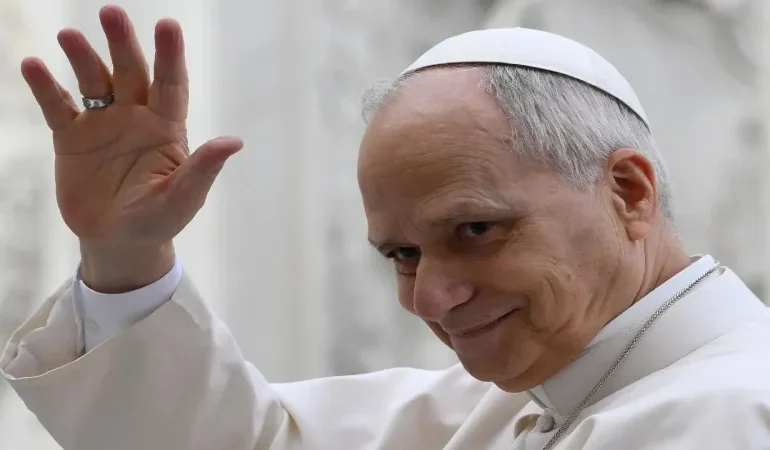

Pope Leo XIV has called on mathematicians and scientists to remain attentive to the moral implications of technological progress as the world marked the International Day of Mathematics. In a message addressed to participants of a global webinar focused on the theme Mathematics and Hope, the Pope emphasized that intellectual achievement alone is not sufficient without a deeper understanding of human identity and purpose. His message was delivered through a letter sent by Cardinal Pietro Parolin, Secretary of State of the Holy See, to Professor Betül Tanbay, Chair of the International Day of Mathematics initiative.
The Pope acknowledged the importance of mathematics in addressing many challenges faced by the global community, especially at a time when technological innovation is transforming societies at an unprecedented pace. He noted that scientific progress carries both promise and responsibility. According to the message, rapid technological developments including artificial intelligence have the potential to benefit humanity but also require careful reflection on their ethical consequences. Pope Leo XIV encouraged researchers to view their work not only as an intellectual pursuit but also as a contribution to the wellbeing of the wider human family.
A particular focus of the Pope’s message concerned the role of algorithms in the development of artificial intelligence and digital technologies. He described this area of research as an important field where mathematicians can contribute to shaping the future responsibly. The Pope said that scientific innovation should not be guided solely by technical ability or efficiency but also by a commitment to ethical reflection. He urged scholars to consider how their discoveries influence society and to ensure that emerging technologies respect the dignity of the human person and support the common good.
Reflecting on his own academic background as a teacher of mathematics and physics, Pope Leo XIV stressed that knowledge alone cannot answer the deepest questions of human life. He explained that scientific understanding must be accompanied by reflection on identity purpose and the meaning of existence. According to the Pope, education and research should help people grow not only in knowledge but also in wisdom and responsibility. In this way scientific communities can contribute to a more humane and compassionate global society.
The Pope also encouraged mathematicians and educators to help humanize the digital environment as technological systems increasingly shape communication and social interaction. He said researchers have the opportunity to guide digital innovation in ways that promote fraternity creativity and cooperation among people. Rather than allowing technology to deepen divisions or inequalities the Pope urged scholars to use their knowledge to foster understanding and solidarity across cultures and societies.
Throughout the message Pope Leo XIV expressed hope that mathematicians and scientists will continue to play a constructive role in addressing the needs of the modern world. He described researchers as potential witnesses of hope truth and goodness who can help ensure that technological progress serves humanity rather than undermining it. By integrating ethical reflection with scientific inquiry he suggested that scholars can help guide innovation toward outcomes that support peace and human flourishing.
The International Day of Mathematics is observed each year to highlight the importance of mathematical research and education across the world. The event brings together academics educators and students to reflect on how mathematical knowledge contributes to scientific discovery technological advancement and social development. Pope Leo XIV concluded his message by offering prayers for wisdom joy and peace for all those participating in this year’s celebration and for those dedicated to advancing knowledge in service of humanity.