
Pope Leo XIV Uses Winter Olympics Moment to Define the Church’s Vision for Sport
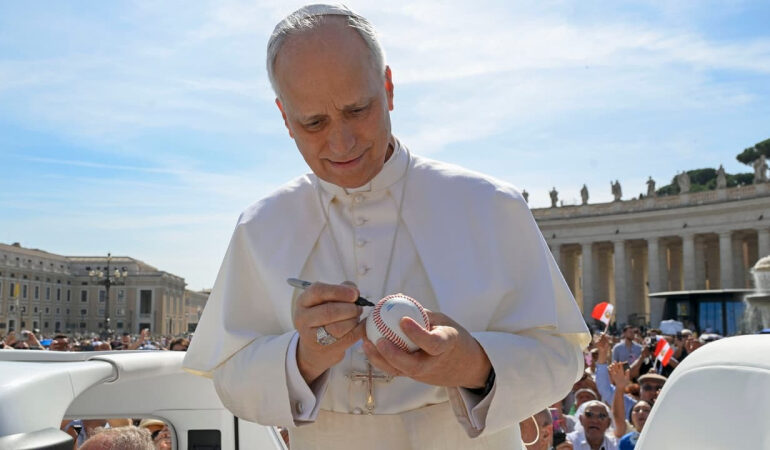

As global attention turns toward Italy for the upcoming Winter Olympics, Pope Leo XIV has used the occasion to articulate a comprehensive vision of how the Catholic Church understands and engages with the world of sport. In a wide ranging letter titled Life in Abundance on the Value of Sport, the Pope reflects on sport not simply as competition or entertainment, but as a deeply human activity with moral, educational, and spiritual dimensions.
Rather than focusing narrowly on the Olympic Games themselves, the Pope situates sport within a broader historical and pastoral context. He recalls that the modern rise of sport as a mass phenomenon coincided with the social transformations of the late nineteenth and early twentieth centuries. During that period, the Church began to recognize sport as a space for education, community building, and evangelization, particularly among young people. He points to figures such as Saint Philip Neri and Saint John Bosco, whose pastoral work linked physical activity with moral formation and care for the whole person.
Pope Leo also places the Church’s engagement with sport within the tradition of Catholic social teaching. He references the influence of Leo XIII’s encyclical Rerum Novarum, noting that the emergence of Catholic sports associations was connected to concerns about workers, dignity, and social justice during the industrial age. From this perspective, sport is presented as a field where values such as fraternity, solidarity, peace, and respect for human dignity can be practiced and made visible.
At the same time, the Pope does not shy away from addressing the serious distortions affecting contemporary sport. He warns that excessive financial interests can undermine its human value, especially when profit and performance become the sole criteria for success. According to the Pope, an obsessive focus on results and monetary reward risks reducing athletes to instruments, sidelining fairness, loyalty, and personal growth. He highlights problems such as doping, dishonesty, and the growing influence of gambling as symptoms of this imbalance.
Another concern raised is the tendency to invest sport with a quasi religious significance. The Pope observes that stadiums are sometimes treated as secular cathedrals, athletes as savior figures, and matches as collective rituals. While this reflects a genuine human desire for meaning and belonging, he cautions that when sport attempts to replace religion, both realities are diminished. Sport loses its playful and symbolic character, while spirituality is emptied of depth.
Pope Leo also addresses emerging challenges linked to technology. He expresses concern about transhumanist approaches and the use of artificial intelligence in sport, warning that technologies aimed solely at optimizing performance can create a harmful separation between body and person. When technology seeks to redefine human limits rather than serve the person, sport risks becoming an experiment rather than a shared human experience.
Through this letter, released ahead of the Winter Olympics, Pope Leo XIV offers a synthesis of more than a century of papal reflection on sport. The document effectively sets a clear framework for how the Church intends to relate to the sporting world, emphasizing that sport should always remain at the service of the human person and the common good.