
Priest Detained During Pensioners Protest Highlights Social Tensions in Argentina
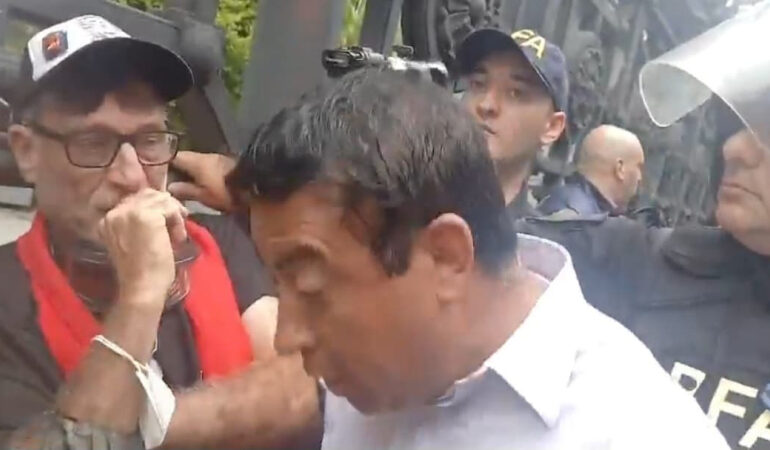

A Catholic priest known for his advocacy on behalf of the poor was briefly arrested during a pensioners protest near Argentina’s Congress, drawing renewed attention to the country’s deepening social and economic tensions. Father Francisco Olvera, widely known as Padre Paco, was detained by federal police on February 4 while accompanying elderly demonstrators calling for higher retirement benefits in Buenos Aires.
Padre Paco, a Spanish born priest who has lived in Argentina for years, has regularly joined pensioners who gather weekly to protest declining purchasing power and insufficient benefit adjustments. The demonstrations have become a visible expression of frustration among retirees who say their income no longer keeps pace with the rising cost of living.
According to the priest, the group was marching toward Congress Square when police moved in and intercepted him. He was taken to a police vehicle and initially accused of resisting authority. Minutes later, authorities added an allegation of minor bodily injury. After video footage recorded by lawmakers and journalists was reviewed by a prosecutor on site, Padre Paco was released and no charges were pursued.
The priest said demonstrators had followed the safety instructions previously communicated by authorities and questioned the necessity of the police response. He described the intervention as sudden and forceful, noting that officers used pepper spray during the operation. The incident, he said, was particularly troubling given the advanced age of many participants, some of whom were in their eighties.
Padre Paco is associated with Curas en Opción por los Pobres, a group of priests identified with grassroots social engagement and advocacy for marginalized communities. He has been detained on other occasions during protests over the past year, including incidents in which he reported being physically assaulted by police.
The protest took place against the backdrop of a worsening pensions crisis in Argentina. For years, benefit increases have failed to match inflation, eroding retirees’ real income. The situation intensified after Javier Milei took office at the end of 2023 and introduced sweeping fiscal reforms aimed at cutting public spending. Since then, many pensioners have reported that adjustments have fallen well short of rising prices, leaving them unable to cover basic needs.
Labor leaders and social analysts warn that broader economic policies are compounding inequality. Former ambassador to the Vatican Carlos Custer has argued that current reforms prioritize extractive industries such as mining and oil while undermining workers’ protections. He noted that Argentina has lost tens of thousands of companies and hundreds of thousands of jobs in recent years, worsening insecurity for older citizens.
The Catholic Church in Argentina has expressed concern over policies that disproportionately affect the poor. While maintaining a cautious institutional stance, several bishops have openly criticized economic measures they say harm vulnerable populations. Bishop Marcelo Colombo, president of the Argentine Episcopal Conference, has repeatedly warned that current reforms risk deepening social exclusion.
Observers say Padre Paco’s actions reflect a broader strand of Catholic social engagement in the country, rooted in solidarity with those most affected by economic hardship. His detention has become a symbol of the growing friction between protest movements and state authorities at a time when many Argentines are struggling to maintain a dignified standard of living.