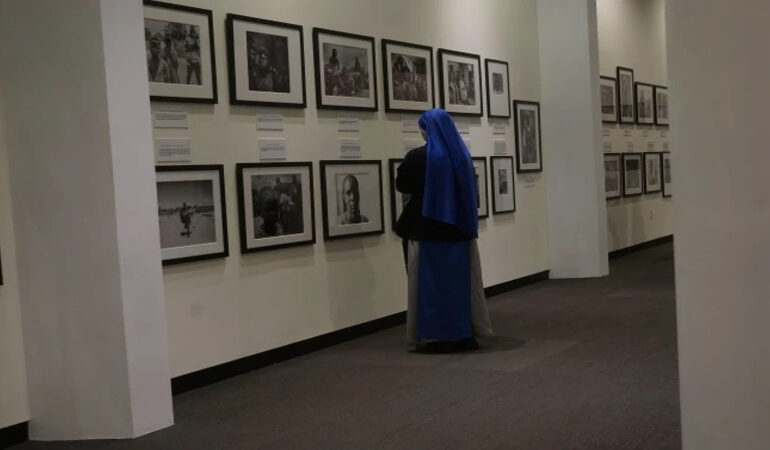

A recent discussion in Washington brought renewed attention to the ongoing persecution of Christian communities in Nigeria and Iraq as two priests described the human stories behind a photo exhibition documenting the lives of those forced to endure violence and displacement. The exhibit, hosted at the Saint John Paul II National Shrine, portrays what its organizers call the forgotten faces of communities struggling to survive amid political instability and targeted attacks. The photographs were taken by a longtime advocate for religious freedom who has spent years accompanying vulnerable families in conflict zones. His work captures not only the visible wounds of persecution but also the dignity and determination that remain present even in moments of profound difficulty. The event aimed to deepen public understanding of conditions in regions often overshadowed by broader geopolitical narratives and highlighted how the lived experiences of affected Christians challenge assumptions about resilience, identity and the long term consequences of marginalization.
Father Atta Barkindo, a Nigerian priest with extensive experience in mediation and interreligious dialogue, spoke about how persecution in his home country has unfolded across generations. He explained that discriminatory policies, restrictions on education and the imposition of systems that disadvantage Christians created the foundation for the violence seen today. According to him, the central issue is not only the presence of extremist groups but a long history of governmental failures that left entire regions vulnerable. Barkindo’s work through The Kukah Centre focuses on strengthening local capacities to detect and respond to threats before they escalate, a strategy that has already been implemented in more than twenty states. He emphasized that the suffering faced by Christian communities is not simply a matter of isolated incidents but part of a broader pattern that affects social participation, economic opportunity and the basic sense of belonging. His testimony underscored the need for sustained international engagement and collaborative efforts to support those living under constant insecurity.
Father Karam Shamasha provided a parallel account from Iraq, detailing how Christian communities there have undergone different phases of persecution since the early 2000s. He described years of seminary closures, displacement during the rise of ISIS and the enduring discrimination that affects daily life even when open violence subsides. His experience in the Nineveh Plains and later in Erbil showed how communities have worked to rebuild not only physical structures but also their cultural and educational foundations. The establishment of the Catholic University of Erbil was presented as a long term commitment to helping young people reclaim dignity and leadership in their own homeland. Shamasha noted that despite decades of instability, Iraqi Christians continue to contribute meaningfully to society, striving to remain more than historical remnants in regions where they have ancient roots. His reflection that communities are fighting to be lights for others captured the central message of the event, which sought to remind audiences that these struggles continue long after media attention fades.