

Rediscovered Rubens Crucifixion Reaches Multi Million Sale After Authentication
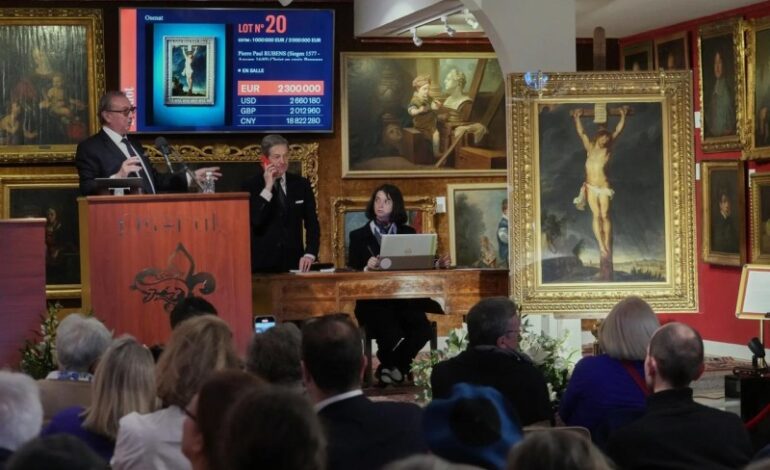

The unexpected reappearance of a long lost painting attributed to Peter Paul Rubens has generated significant attention in the international art community after the work sold for 2.3 million euros in Versailles. The piece, depicting the crucifixion of Christ, had been hidden for centuries inside a private Paris residence before being identified as an original by specialists from the Rubenianum in Antwerp. The discovery sparked broad interest among scholars who noted the rarity of Rubens portraying Christ already deceased on the cross, a subject the Baroque master approached only once in his extensive religious portfolio. Art analysts pointed out that the painting originally carried an extremely modest valuation due to its assumed workshop origin, making its authentication and subsequent sale a striking example of how provenance research and scientific analysis continue to reshape the understanding of Christian art history. Its emergence is being discussed across cultural institutions as a reminder of how significant sacred artworks sometimes reappear after long periods of obscurity, altering both market expectations and academic perspectives.
Scientific verification played a central role in the authentication process, which included pigment analysis confirming Rubens’s characteristic use of blue and green tones in skin rendering. This detail, combined with historical documentation tracing the painting to the collection of nineteenth century French artist William Bouguereau, strengthened expert consensus that the work was genuine. The auction room drew a large audience as specialists outlined the painting’s stylistic precision, anatomical detail and unique depiction of Christ’s side wound, elements rarely executed in the same way across Rubens’s surviving corpus. For researchers studying the intersection of Christian imagery and European artistic development, the discovery offers a valuable window into how theological themes were interpreted by one of the most influential masters of his era. The excitement surrounding the sale demonstrates the continued cultural and scholarly significance of early religious artworks and underscores the sustained market interest in pieces that illustrate pivotal moments of Christian devotion.
The sale also reflects the growing attention placed on rediscoveries that merge religious symbolism with historical narrative, particularly works that reveal how sacred themes migrated through private collections over centuries. Scholars emphasized that the painting’s disappearance in the early seventeenth century and its reemergence in the twenty first century speak to complex patterns of inheritance, trade and preservation that shaped the movement of Christian art across Europe. Auction observers noted that interest in the piece extended beyond its financial value, drawing institutions and collectors who saw the work as a rare theological artifact as well as an artistic achievement. As museums and religious art historians continue to evaluate the implications of the painting’s return, the sale has sparked renewed global conversations about heritage stewardship, preservation ethics and the enduring role of Christian iconography in cultural memory. The painting’s reappearance adds a compelling new chapter to the study of Rubens’s religious compositions and reinforces the importance of safeguarding artistic works tied closely to foundational Christian narratives.