

Remembering Vatican II: Scholars Trace How the Council Still Shapes Modern Catholic Identity
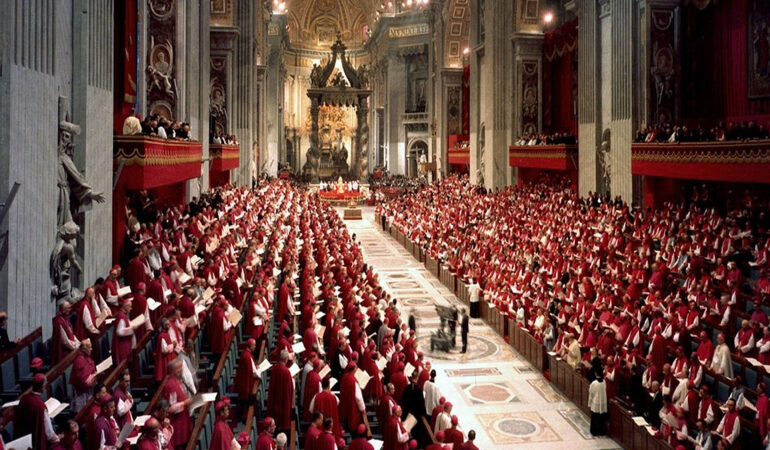

More than sixty years after the Second Vatican Council, scholars continue to analyze how its teachings shape modern Catholic identity across cultural, theological, and pastoral contexts. Vatican II marked a defining moment in the life of the Church, influencing liturgy, ecclesiology, and the Church’s engagement with the modern world. Today, researchers and theologians argue that its legacy remains deeply present in the daily experiences of Catholics and in the institutional rhythms of parish and diocesan life.
The renewed attention to Vatican II reflects a growing interest among younger generations who seek to understand how the Council informs current discussions about mission, community, and the Church’s relationship with society. Academic institutions, historical centers, and diocesan programs continue to host seminars and research initiatives that explore the long-term significance of the Council’s documents and pastoral priorities.
Vatican II and the Development of Contemporary Ecclesiology
One of the clearest areas where the influence of Vatican II remains visible is ecclesiology, the theological study of the nature and structure of the Church. Scholars highlight that the Council shifted emphasis toward a more participatory vision of the Church, describing it as the People of God journeying together in faith. This perspective laid the foundation for greater involvement of the laity in parish life, pastoral councils, and collaborative ministries.
The Council’s emphasis on collegiality among bishops continues to guide discussions about shared responsibility within Church leadership. The development of episcopal conferences and global synodal processes can be traced to Vatican II’s call for more coordinated pastoral engagement. Scholars note that these structures have strengthened dialogue among Church leaders and broadened opportunities for discernment across different regions.
This renewed ecclesiological framework also informs how Catholics understand their role in society. Vatican II encouraged the faithful to bring Gospel values into public life, promoting responsibility toward justice, peace, and human dignity. These principles continue to guide Catholic social teaching and influence how communities respond to global issues.
Liturgical Reform and Ongoing Engagement With Worship
Liturgical reform is one of the most recognizable outcomes of Vatican II. The Council encouraged active participation in the liturgy and promoted the use of vernacular languages to help the faithful engage more deeply with worship. Scholars observe that these changes significantly shaped modern Catholic experience, allowing communities to connect more directly with Scripture and sacramental celebration.
Ongoing research examines how liturgical renewal has influenced parish life, music, and spiritual formation. Many theologians argue that Vatican II’s vision of active participation continues to guide conversations about liturgical education, inclusive practices, and the role of community in worship. These developments highlight how the Council created a foundation for ongoing dialogue about how best to express the richness of the Catholic tradition in diverse pastoral settings.
The liturgical reforms also fostered new opportunities for lay ministry, including lectors, catechists, and musicians. These roles reflect the Council’s emphasis on shared responsibility for the life of the Church.
Openness to Dialogue With the Modern World
Vatican II encouraged a renewed approach to dialogue with modern society. The Council recognized that the Church must engage with cultural, scientific, and social developments in constructive ways. This openness has guided Catholic involvement in global conversations on human rights, education, social justice, and interreligious cooperation.
Scholars note that the Council’s document on the Church in the modern world helped shape the Church’s approach to contemporary questions involving technology, migration, economic systems, and environmental concerns. These themes continue to influence pastoral priorities, particularly within global Catholic institutions focused on humanitarian development and social advocacy.
The Council’s commitment to interreligious dialogue has expanded significantly in recent decades. Today, cooperative initiatives with other faith traditions reflect Vatican II’s call to promote mutual understanding and shared commitment to peace.
Continuing Scholarship and Educational Initiatives
Academic institutions remain central to preserving the legacy of Vatican II. Universities, seminaries, and theological centers regularly host conferences and publish research that explores the Council’s historical context and ongoing relevance. These initiatives help ensure that Vatican II remains a subject of thoughtful study rather than a distant historical event.
Dioceses and parishes also contribute through formation programs that introduce Catholics to the Council’s major themes. These programs emphasize the continuing importance of Vatican II in shaping parish life, spiritual participation, and mission-oriented outreach.
Conclusion
The Second Vatican Council continues to shape modern Catholic identity through its influence on ecclesiology, liturgy, social engagement, and global dialogue. Scholars note that its teachings remain essential for understanding the Church’s mission in the contemporary world. As new generations explore its legacy, Vatican II stands as a guiding reference point for ongoing renewal, participation, and faithful engagement with society.