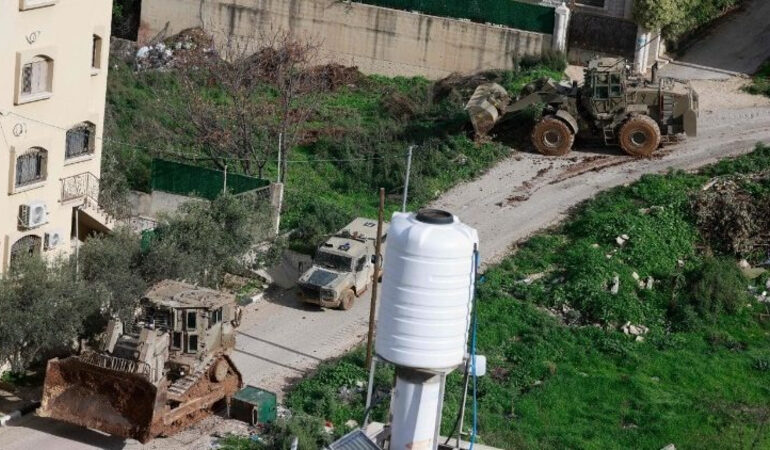

Tensions in the occupied West Bank have intensified as new figures point to a marked increase in violence by Israeli settlers against Palestinian civilians during 2025. Data compiled by the Israel Defense Forces indicate that incidents classified as nationalist crimes rose sharply over the past year, deepening insecurity in an area already strained by prolonged conflict. The escalation comes as violence continues in the Gaza Strip, where civilian deaths and humanitarian hardship remain a daily reality despite intermittent ceasefire efforts. Together, these developments underscore how instability is spreading across multiple fronts, complicating efforts to restore calm. In the West Bank, daily life for many Palestinians is increasingly shaped by fear, disrupted movement, and uncertainty, while the persistence of attacks raises broader questions about law enforcement, accountability, and the long term viability of security arrangements in the territory.
According to the military data, a total of 845 settler related attacks were recorded in 2025, resulting in hundreds of injuries and multiple fatalities among Palestinians. This represents an increase of roughly one quarter compared to the previous year, when authorities documented fewer incidents but a similarly troubling pattern of violence. The steady upward trajectory since late 2023 suggests that the phenomenon is no longer episodic but structural, with implications for both local communities and regional stability. Analysts warn that unchecked aggression risks inflaming wider unrest and undermining already fragile coexistence. The figures also highlight a growing gap between the scale of violence and the effectiveness of current policing responses, reinforcing perceptions among Palestinians that protection is uneven and justice elusive in areas where civilian settlements and military oversight intersect.
The rise in settler attacks is also prompting internal debate within Israel’s security establishment. Senior military officials are reportedly questioning whether civilian police forces are equipped or willing to contain the situation. If violence continues at its current pace, the army may be compelled to increase its presence in the West Bank, including the deployment of additional regular and reserve units. Such a move would further militarize an environment already dense with checkpoints and patrols, potentially heightening friction rather than easing it. The prospect of expanded troop involvement illustrates how settler violence has evolved from a localized issue into a strategic concern, one that threatens to erode security coordination and deepen mistrust between communities living under prolonged occupation.
Meanwhile, diplomatic efforts linked to the broader conflict continue amid uncertainty. Talks related to the next phase of a Gaza ceasefire are underway, with discussions focusing on governance mechanisms and post conflict administration. Yet developments on the ground, particularly in the West Bank, risk overshadowing these initiatives. Humanitarian agencies have continued to warn of the toll on civilians, especially children, whose vulnerability has been compounded by ongoing raids and deteriorating living conditions. The persistence of violence beyond active battle zones illustrates the challenge facing any peace process that seeks to address only one dimension of the conflict. Without addressing the underlying drivers of instability in the West Bank, the prospects for lasting peace across the region remain fragile.