


Rome Restores Colosseum Surroundings to Recreate Ancient Design and Visitor Experience
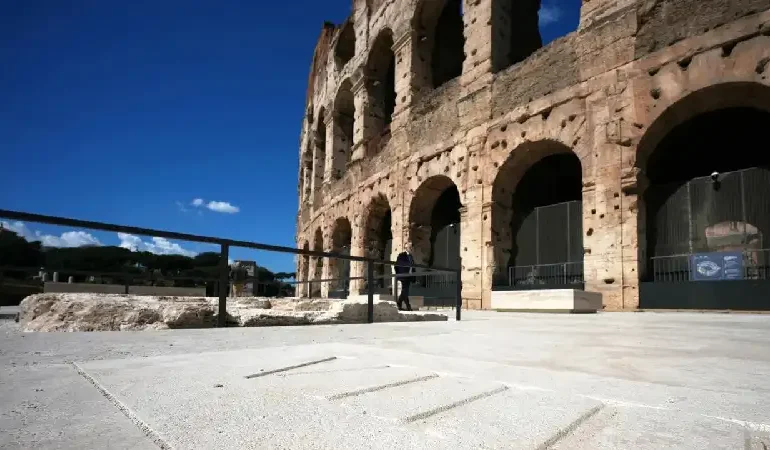

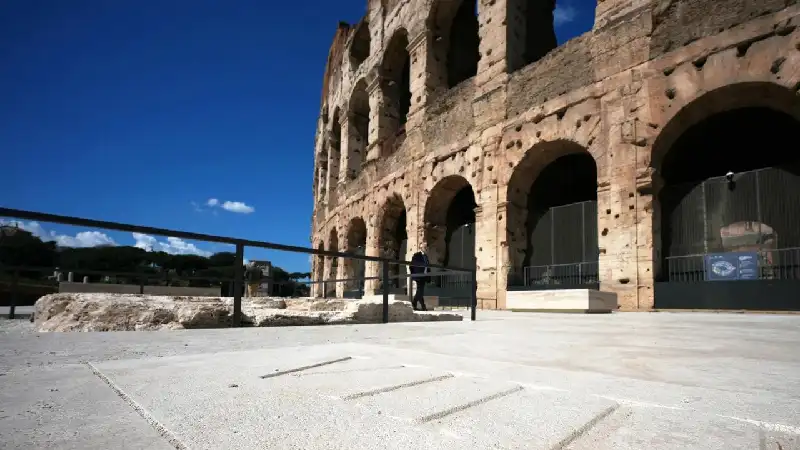
Rome’s Colosseum has been given a renewed architectural presence following a restoration project that recreates the footprint of its ancient columned arcades, offering visitors a closer sense of how the iconic structure once appeared. The project focused on the open space surrounding the amphitheater, where spectators in ancient times gathered before entering the arena. Using travertine marble sourced from the same quarries as in antiquity, designers have introduced large stone slabs that mark the original positions of columns, allowing the public to visually reconnect with the scale and proportions of the historic site.
The redesigned piazza reflects an effort to balance preservation with accessibility, providing a modern space that remains faithful to the Colosseum’s original layout. Visitors can now walk through an area that mirrors the semicircular arcades that once stood around the entrance. These arcades, which collapsed over centuries due to earthquakes and structural instability, had played a central role in managing the flow of thousands of spectators attending events. The restoration gives new life to this lost architectural feature by translating its presence into a contemporary design that remains respectful of the monument’s history.
Architects involved in the project emphasized that the goal was not to reconstruct the past entirely, but to evoke it in a way that enhances public understanding. By placing the travertine blocks precisely where the original pillars once stood, the design helps visitors imagine the height and rhythm of the arches that framed the entrance. The use of authentic materials reinforces this connection, linking modern restoration techniques with the craftsmanship of ancient Rome. The project also highlights the enduring significance of travertine as a defining element of Roman architecture.
Excavation work carried out during the restoration uncovered a range of historical artifacts, including coins, statues, and animal remains, offering further insight into the daily life and activities that once surrounded the Colosseum. Archaeologists also revealed deeper layers of the site, including underground passageways used by emperors to access the arena. These findings contribute to a broader understanding of the Colosseum as not only a monument but also a complex social and political space that played a central role in Roman public life.
The project forms part of a wider effort to enhance infrastructure and visitor experience in the area, supported in part by funding linked to Rome’s urban development initiatives. Recent improvements include the opening of new metro stations designed to improve access to the Colosseum, reflecting the site’s continued importance as a major cultural and tourist destination. With millions of visitors each year, the restoration aims to manage foot traffic while preserving the integrity of one of the world’s most recognized landmarks.
Beyond its architectural significance, the Colosseum also carries deep cultural and religious meaning. In later centuries, it was recognized as a sacred site associated with early Christian martyrs, and it remains a place of spiritual reflection. Today, it continues to host religious events, including annual observances led by the Pope. The restoration therefore not only enhances the physical space but also reinforces the Colosseum’s role as a symbol that bridges history, culture, and faith in the heart of Rome.