

San Francisco Jesuit Parish Supports Migrant Families as Immigration Courts Face Severe Cuts

A Jesuit parish in San Francisco has become a source of stability and support for immigrant families as the city’s immigration court system faces a dramatic reduction in capacity. Over the past year, the number of immigration judges has fallen sharply, leaving one of the busiest systems in the United States struggling to manage an expanding backlog of cases. The situation has created deep uncertainty for asylum seekers, many of whom now face prolonged legal processes and limited access to fair hearings, raising broader concerns about justice, human dignity, and the role of faith communities in times of crisis.
The decline in judicial capacity has had immediate consequences, with cases increasingly delayed and some hearings scheduled years into the future. Legal experts note that the reduction in judges is part of a wider shift in federal immigration policy, which has made it more difficult for individuals to pursue asylum claims. New legal strategies, including procedural dismissals and enforcement actions during court proceedings, have contributed to a climate of fear among applicants. As a result, many migrants are hesitant to appear in court, risking automatic deportation orders that further complicate their already precarious situation.
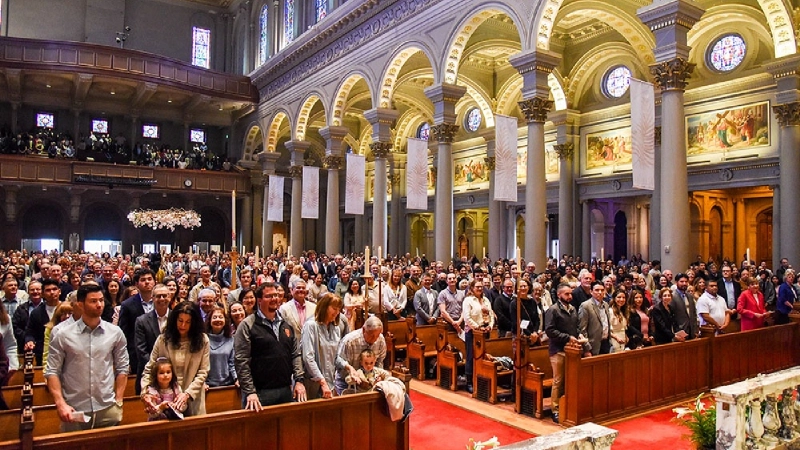
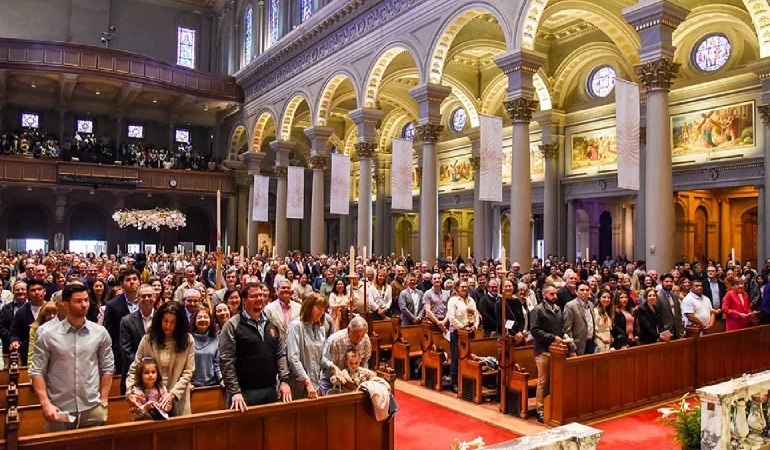
Amid this uncertainty, St Ignatius Parish has continued its long standing commitment to supporting migrant families through both practical and spiritual means. The parish has accompanied several families for years, providing housing assistance, education opportunities for children, and integration into community life. For parish leaders, this work is not simply a social initiative but a direct expression of Catholic teaching, rooted in the belief that every person possesses inherent dignity. The contrast between this message and the reality faced by many migrants has been described by clergy as deeply troubling and morally challenging.
Parish leadership has emphasized that their involvement is guided by the Gospel’s call to welcome the stranger rather than by political considerations. The church declared itself a sanctuary parish several years ago as a way of affirming its identity and mission, even though such status offers no legal protection against enforcement actions. Despite these limitations, the parish continues to serve as a place of refuge and solidarity, demonstrating how faith communities can respond to social challenges through compassion and accompaniment rather than exclusion.
Legal observers point out that the broader immigration system is undergoing significant transformation, with policy changes limiting access to asylum and reshaping how cases are processed. The introduction of remote hearings and the potential closure of court facilities have added further complexity, leaving many families in prolonged states of uncertainty. For those directly affected, the system’s evolving structure has made it increasingly difficult to navigate legal pathways, reinforcing the importance of community support networks such as those provided by local parishes.
The experiences of migrant families in San Francisco highlight the intersection of law, policy, and human experience, particularly in a context where institutional changes carry profound personal consequences. Church leaders and advocates have called for a more balanced approach that upholds both justice and compassion, emphasizing that legal systems must remain attentive to the human realities behind each case. This perspective reflects a broader concern within the Catholic Church about maintaining ethical integrity in public policy.
As the situation continues to evolve, St Ignatius Parish remains engaged in supporting families facing uncertain futures, including exploring alternative pathways should legal options in the United States become unavailable. Their efforts illustrate how local communities can respond to global challenges, offering both practical assistance and a moral framework grounded in faith. The unfolding developments in San Francisco’s immigration system continue to raise critical questions about access to justice, the dignity of migrants, and the role of the Church in advocating for those at the margins.