
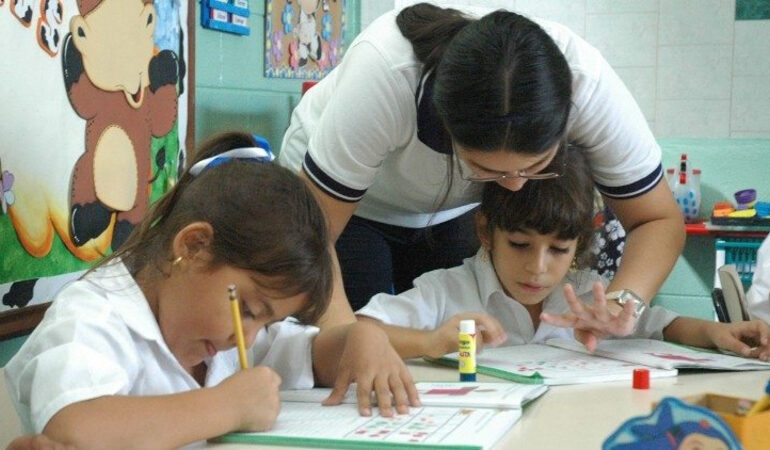

As Venezuela enters a new school year under the weight of prolonged political and social strain, the country’s Catholic bishops have placed education at the center of their moral appeal for peace and justice. Speaking on behalf of the national education commission of the bishops’ conference, Carlos Enrique Curiel Herrera addressed students, teachers, and families with a message that framed schools as spaces where civic harmony can still be cultivated. His words reflect an understanding that classrooms are not insulated from national tensions, yet remain among the few institutions capable of shaping future social attitudes. By calling the educational environment a sacred place for forming conscience, responsibility, and freedom, the bishops presented learning as more than academic instruction. They portrayed it as a quiet but essential response to fragmentation, offering young people tools to imagine a society rooted in justice rather than fear or division.
The message situates education within the broader challenges facing Venezuela, where political uncertainty and economic hardship have placed pressure on families and institutions alike. In this context, the bishops emphasized that returning to school is not merely a routine transition but an opportunity for renewal. Teachers and students were encouraged to see study as a shared effort toward social reconciliation, even when external conditions remain unstable. The appeal avoids political prescriptions, instead highlighting the formative power of daily interactions in classrooms where respect, dialogue, and patience are learned. By addressing the entire educational community, including families, the bishops underscored that peace building begins at a local and relational level, sustained through ordinary commitments rather than dramatic gestures.
Spiritual language woven into the message reinforces this ethical vision without narrowing it to confessional boundaries. References to guidance, service, and wisdom frame education as an act of accompaniment in difficult times. The bishops invoked figures deeply rooted in Venezuelan collective memory as models of humility and dedication, linking moral formation with cultural identity. This approach suggests that national healing does not depend solely on institutional reform but also on recovering shared values transmitted through generations. Schools, in this view, become spaces where faith inspired ethics and civic responsibility intersect, shaping individuals capable of contributing to democratic life even amid uncertainty. The emphasis remains on hope grounded in perseverance rather than optimism detached from reality.
In their concluding appeal, the bishops invited educational communities to consciously protect schools as safe environments for citizenship and democratic culture. They urged listening, discernment, and mutual respect as daily practices that counter polarization. By framing peace as something built through learning and encounter, the message positions education as a stabilizing force within a fragile social landscape. It reflects a broader ecclesial perspective that sees long term transformation emerging from formation rather than confrontation. In a country where institutions are often strained, the bishops’ focus on schools highlights a conviction that the future of justice and peace depends on how the next generation is taught to live together, even when the present remains unsettled.