
Sir James MacMillan Reflects on Silence, Tradition, and Sacred Music at Vatican Institute Event
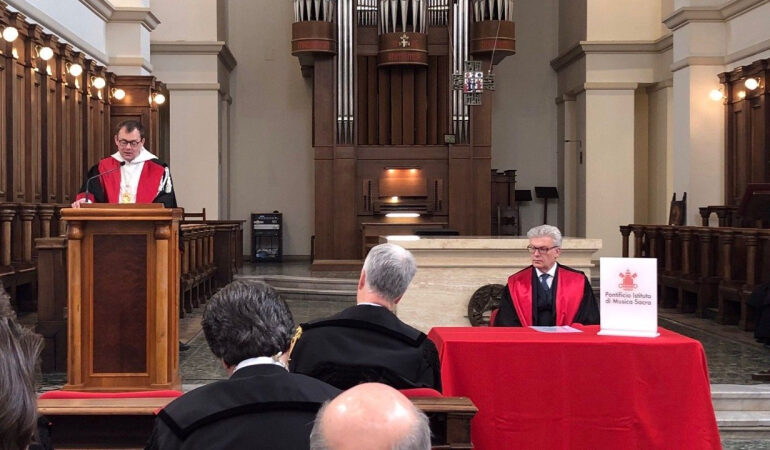

Scottish composer and conductor Sir James MacMillan delivered a major reflection on the spiritual meaning of silence and the future of sacred music during a lecture at the Pontifical Institute of Sacred Music in Rome, where he was awarded a Doctorate Honoris Causa in Sacred Music on March 6. Widely regarded as one of the most influential living composers in the field of sacred composition, MacMillan spoke about the relationship between faith, creativity, and tradition in modern music. His remarks highlighted the continuing importance of sacred music within Catholic worship and its deeper role in guiding prayer and contemplation within the liturgy.
During his address titled The Sound of Silence: Sir James MacMillan’s Vision for the Modern Sacred Music, the composer explored how silence plays a foundational role in artistic creation. He explained that while music is built on sound, its origin often begins in quiet reflection. According to MacMillan, many composers discover their ideas by entering moments of deep silence where imagination begins to take shape. He connected this experience with spiritual life, noting that silence has long been understood within Christianity as a place where individuals encounter God. For him, sacred music emerges from that interior encounter before it is expressed through sound.
MacMillan also reflected on the importance of tradition in sacred composition while encouraging contemporary composers to remain creative rather than simply reproduce older musical forms. He explained that the long musical heritage of the Catholic Church offers an important foundation that continues to shape modern sacred works. In particular, he referred to Gregorian chant and Renaissance polyphony as essential elements of the Church’s musical identity. At the same time he stressed that modern composers should engage with that tradition in a living way, allowing it to influence new compositions that speak to contemporary worship and culture.
In discussing the role of sacred music within the liturgy, MacMillan emphasized that the purpose of music during Mass is not entertainment but prayer. He explained that sacred music is meant to guide the thoughts and devotion of the congregation toward God. According to him, composers who write for the liturgy carry a particular responsibility because their work must support the prayer of the entire assembly. Rather than drawing attention to the performer or the composition itself, liturgical music should help deepen reflection and assist worshippers in directing their attention toward the altar and the sacred mysteries being celebrated.
MacMillan also spoke about the relationship between sacred and secular music within his own body of work. He described his musical language as flexible and pluralistic, meaning that it can adapt to different contexts and themes. However, he acknowledged that composing for the liturgy requires a different level of spiritual awareness. Music written for worship must help carry the prayers and contemplative thoughts of the faithful. He noted that composers engaged in sacred music must remain attentive to the spiritual purpose of their work, ensuring that their compositions continue to serve the deeper prayer life of the Church while remaining rooted in the long tradition of Catholic musical heritage.