

Sixty Years After Vatican II Reflections Renew Focus on the Council’s Ongoing Mission
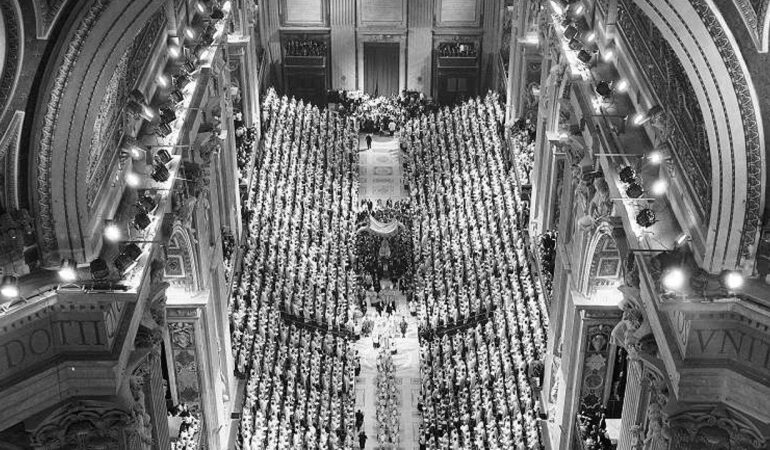

As the Church marks sixty years since the close of the Second Vatican Council, renewed attention is being given to the Council’s original purpose and the challenges it sought to confront in a world already showing signs of deep secularization. Contemporary reflections highlight the same concern once expressed by Pope Benedict XVI, who warned that confidence in the persistence of Christian faith could no longer be assumed. Long before the Council convened, pastors in major cities observed how traditional expressions of faith were losing resonance in environments shaped by industrialization, finance and cultural shifts. The Council’s architects recognized that the end of the age of Christendom required a renewed commitment to communicating the Gospel through language capable of engaging people whose primary challenge was not hostility to faith but indifference. The Council thus articulated a vision rooted in essentials rather than nostalgia, inviting the Church to encounter the world not as a fortress under threat but as a community called to witness with clarity and humility.
Debates surrounding the Council’s legacy have often been polarized between those who attribute current ecclesial challenges to its reforms and those who place their hopes in further adaptation. Yet such views risk misunderstanding the historical moment in which the Council emerged and the reality that the crisis of faith had already begun long before 1962. The Council positioned itself not as a repudiation of tradition nor as a capitulation to cultural pressures, but as a rearticulation of the Church’s mission grounded in its foundational identity. This is captured in the opening lines of Lumen gentium, which emphasize that Christ, not the Church, is the light of nations. The Church’s role is to allow that light to shine through rather than draw attention to itself. This perspective continues to shape contemporary teaching, reminding believers that the Church does not possess the Gospel as a private resource but receives it as a gift meant to be shared transparently, without reliance on worldly strategies or self-protection.
This understanding has practical implications for ecclesial life today. A Church conscious that it does not originate the faith approaches the world without defensiveness, cultivating dialogue, seeking forgiveness where needed and remaining open to encounter with those who stand at the margins. It recognizes that spiritual renewal is rooted in humility and service rather than institutional prestige. Pope Leo recently invoked this dynamic by recalling the biblical image of a small shoot emerging from a seemingly lifeless stump, an image meant to illustrate how God works through what appears weak or insignificant. He linked this image to the experience of Vatican II, describing the Council as an enduring moment of newness that continues to bear fruit when communities walk together in pursuit of the Kingdom. The many stories of hope and service that emerged during the Jubilee Year point to a global Church still responding to the Council’s call. Even after six decades, the work envisioned by the Council remains in progress, sustained by individuals and communities committed to renewing the mission it set in motion.