South Korean Catholics Urge Denuclearization Ahead of Fukushima Anniversary
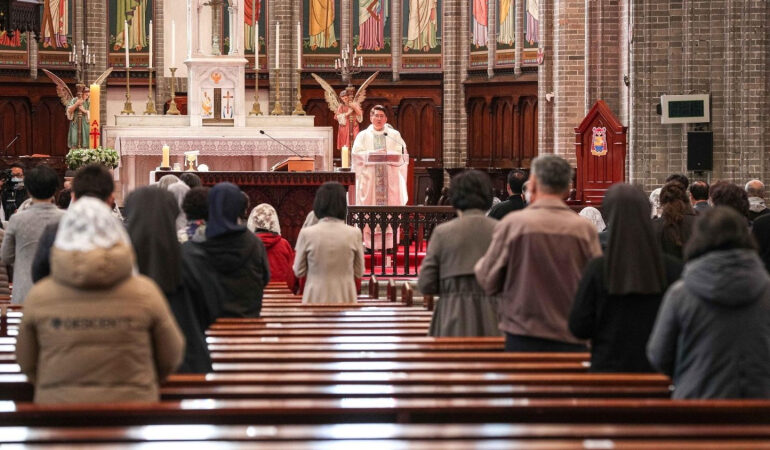

South Korean Catholics have launched a public call for denuclearization as the country approaches the fifteenth anniversary of the Fukushima nuclear disaster. In central Seoul, clergy and lay faithful have begun a series of outdoor Masses opposing the extension of aging nuclear reactors and the construction of new plants, framing the issue as both an environmental and moral concern.
The initiative, known as the Gwanghwamun Mass Against Nuclear Power Plants, began in mid February and will continue until early March, leading up to March 11, the anniversary of the Fukushima Daiichi nuclear disaster in Japan. The opening liturgy was celebrated near the Sejong Center for the Performing Arts in Jongno district, drawing priests, religious, and members of the faithful who voiced concern about national energy policies.
Organizers say the Masses are intended to pray for a reconsideration of government decisions related to nuclear energy. In recent years, debate has intensified in South Korea over whether to extend the operating life of older reactors and invest in new facilities to meet rising electricity demand, particularly from technology and semiconductor sectors.
During the opening celebration, a symbolic drum representing radioactive waste was placed before the altar, underscoring the long term consequences of nuclear energy production. Clergy speaking at the gathering questioned the wisdom of extending aging plants, including units at the Kori nuclear complex, and raised concerns about safety and environmental impact.
Several speakers pointed to historical disasters as cautionary reminders. The explosion at Chernobyl in 1986 and the meltdown at Fukushima in 2011 remain defining events in global nuclear history. Participants warned that prolonging the operation of older reactors carries risks that could affect densely populated areas and future generations.
Critics of nuclear expansion argue that renewable energy alternatives such as solar and wind power can be deployed more quickly and with fewer long term environmental consequences. They maintain that investing in renewables would better address the climate crisis while reducing dependence on large scale nuclear infrastructure.
The movement also reflects broader Catholic social teaching on care for creation and the protection of human life. Participants described ecological responsibility as inseparable from respect for human dignity. They called for what they termed ecological conversion, urging citizens and policymakers to reconsider energy strategies in light of long term safety and sustainability.
A special Mass for denuclearization is scheduled for March 11 to mark the Fukushima anniversary. Organizers have also announced an ongoing campaign encouraging greater public awareness and participation in ecological advocacy.
As the anniversary approaches, South Korean Catholics say their public prayer is intended not as political confrontation but as a conscience driven appeal for a safer energy future, grounded in faith, moral reflection, and a commitment to protect life and creation.