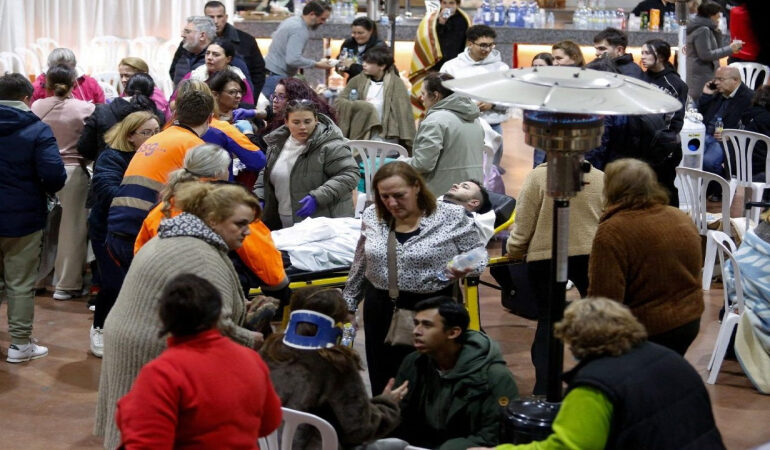

In the wake of the deadly railway crash near the town of Adamuz in southern Spain, a local parish has emerged as a place of refuge for survivors and families grappling with shock and loss. As emergency services continued rescue and identification efforts, San Andrés Parish remained open through the night, welcoming those who did not require immediate medical treatment. With dozens confirmed dead and many more injured or unaccounted for, the hours following the accident were marked by confusion and grief. The parish priest, Rafael Prados, described how the church community responded instinctively as the scale of the tragedy became clear. Residents arrived with food, water and bedding, transforming parish rooms into spaces of rest and calm. The parish offered a temporary haven where survivors could pause, regain composure and feel accompanied during an unfolding emergency that had shaken the wider region.
Those arriving at the parish were offered warmth, hot drinks and a place to sit, while volunteers focused on listening as much as providing material assistance. Many passengers, still processing what they had experienced, needed time and quiet more than words. According to parish staff, this simple presence helped ease fear and distress during an otherwise overwhelming night. Those with serious injuries were transferred to hospitals or treated at a nearby field facility, while families awaited news of loved ones amid growing anxiety. Church representatives coordinated closely with local authorities as identification efforts continued. In the days following the crash, Jesús Fernández González visited the town to meet relatives and express solidarity. Families were later moved to Córdoba, where chaplains accompanied the injured and offered support within hospital settings as medical teams worked under pressure.
Beyond immediate relief, the parish emphasised continuity of care in the days ahead, committing to prayer and ongoing accompaniment for those affected. Clergy and volunteers stressed that the Church’s role in moments of collective trauma is rooted in closeness rather than visibility. Pope Leo XIV conveyed condolences to the victims’ families, reinforcing the sense of shared mourning across the country. As authorities proceed with formal identifications, the parish has indicated it will hold a Mass for the deceased once all names are confirmed. For many families, this promise of remembrance offers a measure of comfort amid uncertainty. While investigations continue and the full impact of the crash is assessed, the response of the local parish reflects a broader pastoral approach centred on presence, dignity and compassion. In a moment defined by sudden loss, the open doors of a small church became a sign of solidarity and quiet hope.