
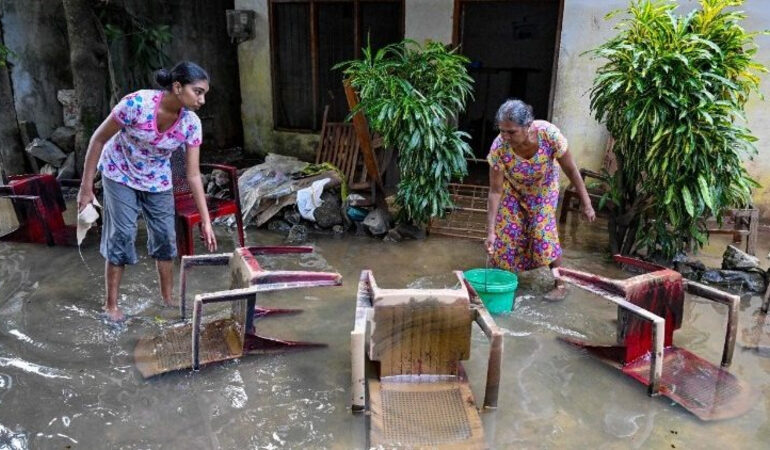

Sri Lanka continues to grapple with the aftermath of devastating floods triggered by Cyclone Ditwah, an emergency that claimed more than 600 lives and disrupted the lives of millions across the island. As communities confront loss, displacement, and prolonged uncertainty, the Catholic Church has emerged as a stabilizing presence alongside state institutions. Church networks across dioceses have mobilized humanitarian and pastoral responses aimed not only at immediate relief but at sustaining morale during a long recovery. With more than a fifth of the country affected, damage has extended far beyond homes to essential infrastructure, including roads, railways, bridges, and power systems. The scale of destruction has placed immense pressure on families already strained by years of economic hardship. In this context, Church leaders have framed their role as one of accompaniment, emphasizing hope as a practical necessity rather than an abstract ideal during national recovery.
Catholic communities throughout the country have coordinated assistance that extends beyond emergency aid, recognizing that recovery will unfold over months and years rather than weeks. Support has included food distribution, temporary shelter, and financial assistance, while also addressing less visible needs such as trauma, grief, and social dislocation. Church leaders have described this approach as a sustained commitment rather than a temporary intervention. By maintaining presence in affected communities, parishes and Church agencies have sought to prevent isolation among those who lost homes or livelihoods. This engagement has continued through significant moments, including the Christmas season, when pastoral outreach took on added importance for families facing displacement. The Church’s involvement has been shaped by the understanding that disasters of this magnitude fracture not only infrastructure but also social bonds, requiring responses that rebuild trust and dignity alongside physical reconstruction.
The floods inflicted widespread damage on public infrastructure, compounding challenges for a country still emerging from economic collapse in recent years. Hundreds of thousands of buildings were destroyed, along with thousands of kilometers of roads and rail lines, disrupting commerce, education, and access to services. Government authorities have accelerated reconstruction programs, prioritizing transportation networks, schools, and utilities while expanding social assistance for the most vulnerable. Financial support has been directed to households that lost homes or income, including targeted aid for families with school age children to help restore a sense of normalcy. Church representatives have acknowledged these efforts and stressed the importance of coordination between public authorities, local communities, and international partners. This collaboration has helped reinforce confidence that recovery, though costly and complex, is underway rather than stalled.
Reconstruction costs are estimated to reach levels that place heavy strain on national finances, particularly as the disaster followed a period of debt restructuring and economic adjustment. Against this backdrop, international assistance and solidarity have played a crucial role in sustaining momentum. Church organizations, including global charitable networks, have contributed resources and expertise to complement domestic efforts. Church leaders have emphasized that visible cooperation between institutions helps affected communities feel supported rather than forgotten. The emphasis on hope has been expressed not as optimism detached from reality, but as resilience grounded in shared responsibility. As rebuilding continues, the Church’s role has highlighted how faith based institutions can function as connective tissue during crises, linking material aid, moral support, and long term commitment in moments when national endurance is being tested.