


Stewardship Over Scale: Inside the Vatican’s Rebalanced Financial Governance Model
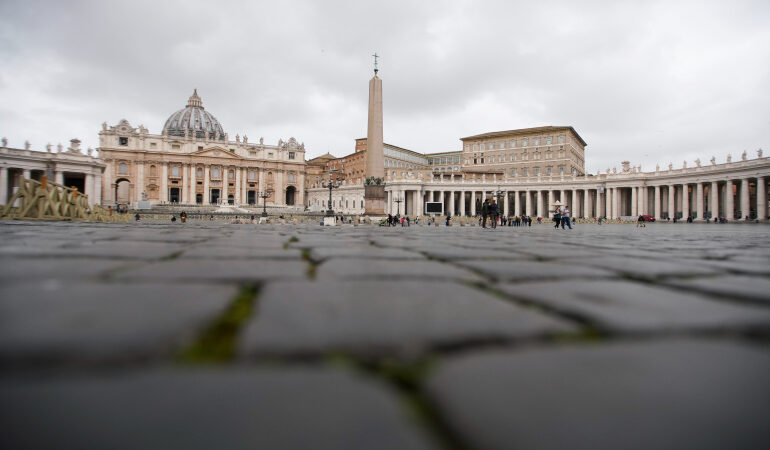

In 2026, the Vatican’s approach to economic management reflects a deliberate shift away from expansion driven financial thinking toward a model grounded in stewardship. This transition is not sudden, nor is it reactive. It represents the culmination of years of structural reform aimed at aligning financial governance with the Church’s moral and pastoral mission.
Rather than measuring success through asset growth or institutional scale, Vatican economic leadership is emphasizing responsibility, transparency, and long term sustainability. The goal is not to compete within global financial systems, but to operate credibly within them while maintaining ethical coherence.
Financial Governance Anchored in Moral Responsibility
At the core of the Vatican’s rebalanced model is the principle that financial resources exist to serve mission, not institutional ambition. Economic decisions are increasingly evaluated through ethical criteria alongside financial prudence. This includes careful consideration of risk exposure, reputational impact, and alignment with Church teaching.
Central oversight structures now play a stronger role in ensuring consistency across departments. This has reduced fragmentation and strengthened accountability, allowing financial governance to function with clearer mandates and fewer overlaps. The emphasis is on disciplined management rather than rapid expansion.
This model reflects an understanding that credibility is a form of capital. By prioritizing moral responsibility, the Vatican aims to safeguard trust among the faithful and international partners alike.
Moving Away From Growth Driven Metrics
Historically, large institutions often equated financial health with growth. In the Vatican’s current framework, growth is no longer treated as an inherent good. Instead, stability, clarity, and sustainability are the primary benchmarks.
Investment strategies have been refined to limit speculative exposure and avoid sectors misaligned with ethical principles. Financial activity is structured to preserve assets over time rather than maximize short term returns. This conservative posture reduces volatility and reinforces institutional integrity.
By rejecting growth for its own sake, the Vatican positions itself as a moral outlier in a global economy often driven by scale and speed. This restraint signals seriousness of purpose rather than hesitation.
Strengthening Transparency and Internal Controls
Transparency remains a foundational pillar of the Vatican’s economic governance in 2026, but its role has evolved. The focus has shifted from disclosure alone to internal coherence and operational discipline.
Clear reporting structures, standardized procedures, and enhanced auditing practices are now embedded across economic offices. These measures are designed to prevent ambiguity and ensure that responsibility is traceable at every level of decision making.
Transparency is treated not as a defensive posture but as a cultural norm. When governance systems are predictable and visible, trust becomes sustainable rather than episodic.
Financial Stewardship as Institutional Witness
The Vatican’s economic posture also carries symbolic weight. In an era marked by financial excess and institutional distrust, stewardship serves as a form of witness. It communicates that moral authority is reinforced through restraint, not accumulation.
This approach influences how the Vatican engages with external partners. Relationships are framed around mutual responsibility and long term reliability rather than transactional advantage. Economic credibility becomes part of the Church’s broader moral presence in global affairs.
Internally, stewardship oriented governance fosters confidence among those tasked with administration. Clear principles reduce uncertainty and encourage decisions rooted in service rather than risk avoidance or personal discretion.
Conclusion
The Vatican’s rebalanced financial governance model in 2026 reflects a conscious choice to prioritize stewardship over scale. By grounding economic management in moral responsibility, transparency, and sustainability, the Holy See reinforces its credibility as both an institution and a moral voice. This model does not seek prominence within global finance, but integrity within its own mission, offering a measured and coherent approach to economic governance.