


Tanzanian Catholic Bishop Urges Graduates to Use Social Media Responsibly in AI Driven Era
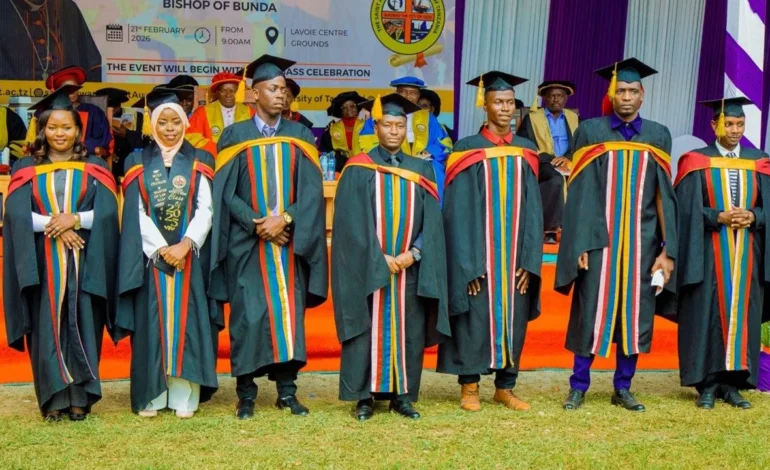

A Catholic bishop in Tanzania has urged university graduates to approach social media with responsibility and moral awareness as digital platforms and artificial intelligence increasingly shape modern communication and education. Speaking at the 28th graduation ceremony of St Augustine University of Tanzania in Mwanza, Bishop Simon Masondole of the Diocese of Bunda encouraged young graduates to reflect carefully on how they use emerging technologies. He said social media offers valuable opportunities for research, learning, and entrepreneurship, but it also presents ethical challenges that demand thoughtful judgment. The message highlighted the growing role of the Church in guiding young professionals as digital technology transforms social life, education, and public discourse across Africa.
Bishop Masondole told graduates that responsible digital engagement is an important part of their role in society. While acknowledging that social media has become a powerful tool for information exchange and innovation, he warned that it can also expose users to harmful content and unethical behaviour. According to the bishop, graduates must weigh both the benefits and risks of online platforms in academic and social environments. He stressed that the rapid expansion of artificial intelligence and online networks has created a complex digital landscape where individuals must develop strong ethical awareness. By exercising discernment and responsibility, young professionals can ensure technology serves the common good rather than undermining social values.
The bishop also raised concerns about the growing influence of artificial intelligence in education and research. He noted that while AI can assist learning and productivity, it must remain a tool rather than a substitute for human reasoning and responsibility. According to him, educational institutions must ensure that graduates continue to develop critical thinking and ethical judgment. He cautioned that relying entirely on automated systems risks weakening academic integrity and intellectual independence. Universities, he said, should promote research on the impact of digital platforms and artificial intelligence on student development, mental health, and academic performance to ensure that education remains grounded in human creativity and moral responsibility.
During his address he also warned students about the dangers of misinformation and harmful online behaviour. He said the speed at which information spreads on social media has intensified what he described as a global information struggle where misleading narratives can easily circulate. Graduates were urged to verify information before sharing it and to avoid becoming participants in online campaigns that spread hatred, manipulation, or humiliation. Responsible communication, he said, is essential for maintaining social harmony and protecting the dignity of others. The bishop encouraged students to see digital platforms not only as spaces for expression but also as environments where ethical responsibility and respect for truth must guide every action.
The role of the Catholic Church in education was also highlighted during the ceremony. Bishop Masondole reminded the audience that St Augustine University of Tanzania was founded by the Tanzania Episcopal Conference with the mission of supporting national development and addressing social challenges through education grounded in Gospel values. The university has long served as an institution that connects faith based principles with academic training. By promoting social justice, community development, and ethical leadership, the Church aims to prepare graduates who can contribute positively to society while upholding moral responsibility in their professional and public lives.
University leadership also reaffirmed its commitment to strengthening academic quality and international cooperation. Vice Chancellor Father Professor Juvenalius Asantemungu said the institution continues to invest in teaching facilities and faculty development to maintain high educational standards. He noted that partnerships with universities across Africa and beyond have created exchange opportunities for both students and lecturers. These collaborations allow academic communities to share knowledge and research while expanding educational experiences for Tanzanian students. The university has increasingly encouraged international academic engagement as part of its long term strategy to enhance research capacity and broaden learning opportunities.
Local government officials attending the ceremony also praised the Catholic Church for its contributions to education and social services in Tanzania. Nyamagana District Commissioner Amina Makilagi congratulated the graduating students and acknowledged the role played by Catholic institutions in strengthening national development. She said the Church has helped expand educational access while supporting social programs that benefit communities across the country. Her remarks reflected the close cooperation between faith institutions and public authorities in advancing development initiatives that promote education, social welfare, and community stability.
St Augustine University of Tanzania remains one of the country’s largest private universities. The institution evolved from the former Nyegezi Social Training Institute and was officially upgraded to university status in 1998. Over the years it has expanded its academic offerings from certificate programs to doctoral studies while establishing campuses in several regions including Dar es Salaam, Arusha, Tabora, Morogoro, and Mtwara. The university continues to attract students from across Tanzania and neighboring countries, reflecting the growing role of faith based institutions in shaping higher education and leadership development in East Africa.