



Taybeh Christian Community Faces Escalating Settler Incursions as Calls for Protection Intensify
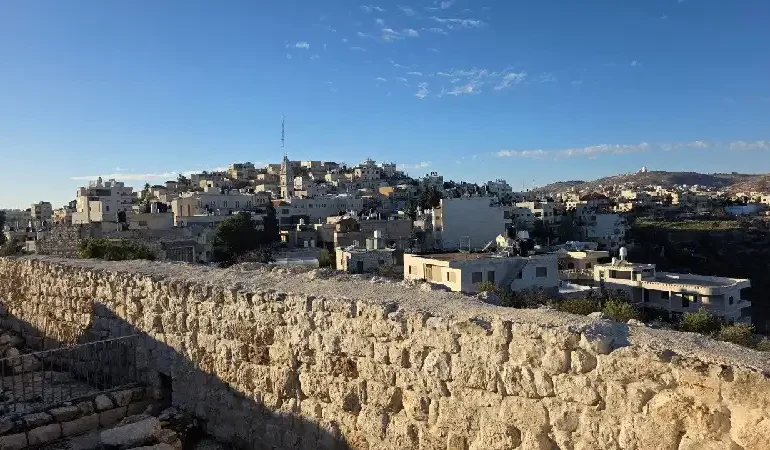

Tensions are rising in Taybeh, a Palestinian town in the West Bank known as the last entirely Christian community in the region, as residents report a new wave of settler incursions targeting both homes and economic infrastructure. The developments come amid broader instability across the territory, where settlement expansion policies and increased civilian violence are reshaping daily life. Local leaders warn that the situation has entered a more serious phase, with strategic sites now being occupied. The latest incidents have heightened fears of land appropriation and long term displacement among families who have lived in the area for generations.
According to accounts from local residents, settlers entered a cement factory and quarry on the western outskirts of Taybeh early on March 19 and maintained their presence into the following day. Witnesses say that religious rituals were conducted at the site and that a national flag was raised on top of industrial storage facilities. Although police forces were contacted and briefly intervened, the settlers reportedly returned within a short time and re established their presence. The repeated pattern has created a sense of uncertainty among residents, who say enforcement actions have not provided lasting protection.
Local church leadership has described the situation as a shift from sporadic attacks to more coordinated efforts targeting key areas of economic and territorial importance. Earlier incidents had largely affected the eastern side of the town, but the focus on western infrastructure suggests a broader strategy aimed at consolidating control over critical land corridors. Taybeh spans a significant area of approximately 4,000 acres, making it both strategically important and vulnerable. Community members fear that continued incursions could lead to gradual loss of access to land that supports local livelihoods and sustains the town’s economic activity.
Speaking about the developments, parish priest Father Bashar Fawadleh expressed concern over what he described as a worsening environment for civilians. He noted that even when authorities respond to emergency calls, the response has not prevented repeated re entry by settlers. He also highlighted the daily pressures faced by residents, including movement restrictions and checkpoints that limit access to nearby towns and essential services. The situation, he said, reflects a deeper struggle for security and dignity, as families attempt to maintain normal life under increasingly constrained conditions.
Taybeh holds a unique place in the region due to its continuous Christian presence and historical significance. The town is home to ancient churches and longstanding traditions that reflect centuries of religious life. Its identity as a fully Christian community has drawn attention from global religious observers, particularly as demographic changes continue across the wider region. Over recent years, many Christian communities in the Middle East have faced emigration and declining numbers, adding further importance to Taybeh as a cultural and spiritual landmark.
Beyond the immediate security concerns, residents point to a broader context of expanding settlements and shifting land dynamics across the West Bank. Policy decisions supporting settlement growth have contributed to rising tensions, with increased reports of confrontations between settlers and Palestinian communities. Analysts note that such developments often create complex legal and humanitarian challenges, especially in areas where land ownership and jurisdiction remain disputed. For local populations, these dynamics translate into everyday uncertainty and reduced access to resources.
Community leaders are now appealing for international attention and monitoring, urging global institutions to observe conditions on the ground and support measures that ensure civilian protection. Residents say they are seeking a future defined by stability, where they can live without fear and maintain their cultural and religious heritage. Despite the ongoing difficulties, many continue to express hope that diplomatic engagement and international awareness may help ease tensions and prevent further escalation in one of the region’s most historically significant communities.