


The Church After Transition: How Pope Leo XIV Is Reframing Moral Leadership
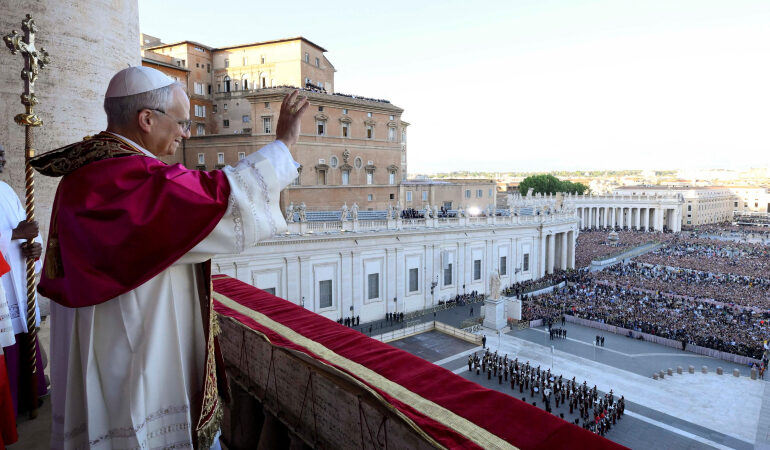

The election of Pope Leo XIV has introduced a period of thoughtful recalibration within the Catholic Church rather than abrupt change. His early public messages reflect a clear intent to preserve doctrinal continuity while reorienting how moral leadership is communicated in an increasingly fragmented global environment. The emphasis is not on spectacle or rhetorical confrontation, but on restoring trust through clarity, consistency, and pastoral responsibility.
At a time when religious institutions face skepticism across many societies, the new pontificate appears grounded in restraint. Pope Leo XIV’s tone suggests an understanding that moral authority today is sustained less by visibility and more by credibility. His leadership approach signals a Church that seeks to guide conscience quietly and steadily, rather than compete within political or cultural arenas.
Moral Authority Rooted in Continuity
One of the defining features of Pope Leo XIV’s early leadership is his emphasis on continuity as a source of moral strength. Rather than framing the transition as a break from the past, he has consistently highlighted the Church’s enduring teachings as anchors in an unstable world. This approach reinforces the idea that moral leadership is cumulative, built over time through coherence between belief and practice.
By reaffirming core doctrinal positions without amplifying internal divisions, the pontiff is reinforcing institutional stability. This continuity allows the Church to speak with a unified voice, particularly on issues of human dignity, social responsibility, and ethical limits. In doing so, the papacy positions itself as a steady moral reference point rather than a reactive commentator.
A Pastoral Tone Over Cultural Confrontation
Pope Leo XIV’s public demeanor reflects a deliberate shift toward pastoral engagement over cultural confrontation. His speeches and appearances emphasize listening, accompaniment, and discernment rather than rhetorical opposition. This tone acknowledges the complexity of modern social realities without diluting moral teaching.
The emphasis on pastoral realism does not signal retreat, but recalibration. By addressing believers and critics alike with measured language, the Church reduces the perception of distance between doctrine and lived experience. This approach aims to foster moral reflection rather than defensiveness, particularly among younger Catholics navigating ethical uncertainty.
Reframing Leadership in a Fragmented World
Global fragmentation has reshaped how moral leadership is perceived and exercised. Pope Leo XIV appears attentive to this reality, framing the Church’s role as one of ethical orientation rather than political alignment. His leadership avoids direct entanglement in partisan debates, instead reinforcing universal principles that transcend national or ideological boundaries.
This reframing allows the Church to engage global issues such as inequality, conflict, and social cohesion without being absorbed into ideological disputes. By emphasizing principles over positions, the papacy preserves moral clarity while respecting the pluralistic contexts in which the Church operates worldwide.
Institutional Humility and Governance Credibility
Another notable aspect of this transition is the renewed emphasis on institutional humility. Pope Leo XIV’s leadership style reflects awareness that credibility is strengthened when authority is exercised with accountability. This perspective extends beyond rhetoric into governance, reinforcing expectations of transparency and responsibility within Church structures.
Such humility does not weaken leadership. Instead, it aligns moral teaching with institutional conduct, reinforcing trust among the faithful. In an era where institutional skepticism is widespread, this alignment becomes a crucial component of moral authority.
Conclusion
Pope Leo XIV’s early pontificate reflects a recalibration of moral leadership grounded in continuity, pastoral realism, and institutional humility. Rather than asserting influence through confrontation or visibility, the Church is being positioned as a steady ethical presence shaped by credibility and coherence. This approach suggests a long-term vision in which moral leadership is sustained through trust, restraint, and faithful witness in a fragmented world.