
The Curia’s Role Is Evolving Under Pope Leo XIV Here’s How
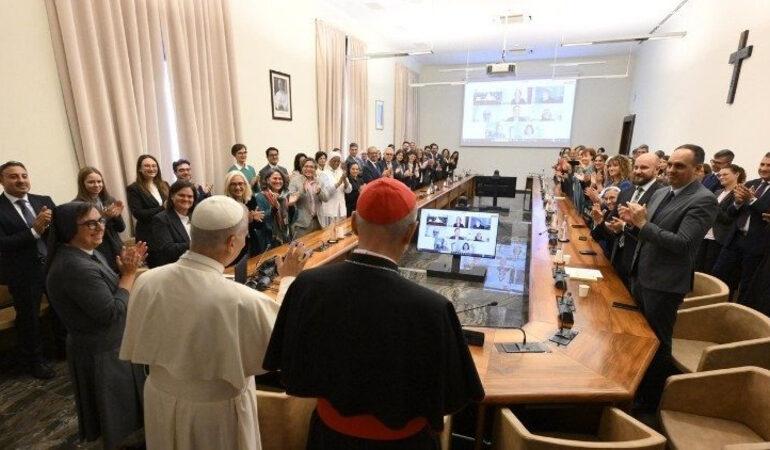

The Roman Curia has long functioned as the administrative and advisory heart of the Catholic Church. While often perceived as static, its role has gradually adapted to changes in leadership, global realities, and pastoral needs. Under the pontificate of Pope Leo XIV, the Curia is entering a phase of evolution shaped less by immediate reform and more by recalibration of purpose and tone.
This evolution is not unfolding through dramatic restructuring or public mandates. Instead, it reflects a quieter process in which existing offices continue their work while adjusting to new expectations. The early months of the pontificate suggest that the Curia’s role is being refined to better support doctrinal clarity, global coordination, and institutional stability within a diverse and complex Church.
Reorienting the Curia Toward Service and Support
One of the clearest signals under Pope Leo XIV is a renewed emphasis on the Curia as a service oriented body. Rather than positioning itself as a central authority issuing constant directives, the Curia is being framed as a structure that supports the Pope’s teaching mission and assists local churches. This shift highlights coordination over control.
By reinforcing service as its primary function, the Curia strengthens trust between Rome and dioceses worldwide. Offices are expected to provide guidance, expertise, and consistency while respecting the pastoral responsibilities of bishops. This reorientation helps ensure that governance supports mission rather than overshadowing it.
Greater Emphasis on Doctrinal Consistency
Doctrinal clarity has emerged as a defining theme of the current pontificate, and the Curia plays a key role in this focus. Departments responsible for theological matters are operating with renewed attention to coherence and precision. The aim is not to introduce new teaching but to present existing doctrine clearly and consistently.
This emphasis responds to a global environment where ambiguity can create division. By strengthening doctrinal alignment within Curial operations, the Vatican ensures that guidance offered to the global Church reflects a unified theological framework. This consistency reinforces the Pope’s role as teacher and guardian of faith.
Coordination Across a Global Church
The Curia’s evolving role also reflects the realities of a truly global Church. With Catholic communities spread across diverse cultural, legal, and social contexts, coordination has become more complex. Under Pope Leo XIV, Curial offices appear increasingly attentive to listening as well as directing.
This approach allows the Curia to act as a bridge between Rome and local churches. Information flows in both directions, helping Vatican leadership understand regional challenges while offering guidance rooted in shared belief. Such coordination strengthens unity without requiring uniform solutions.
Stability Through Gradual Adjustment
Another defining feature of this evolution is its pace. Rather than rapid change, the Curia is adjusting gradually. This deliberate tempo allows officials to adapt responsibilities without disrupting ongoing work. It also gives the Pope time to observe, consult, and refine expectations.
Stability is a priority during the early stages of any pontificate. By maintaining continuity while allowing roles to evolve, the Vatican avoids uncertainty and preserves institutional confidence. This methodical approach reflects an understanding that effective governance in the Church depends on patience as much as vision.
Conclusion
The evolution of the Curia under Pope Leo XIV is marked by restraint, clarity, and purpose rather than dramatic reform. By reorienting the Curia toward service, reinforcing doctrinal consistency, and strengthening global coordination, the Vatican is refining how governance supports the Church’s mission. This gradual adjustment preserves stability while aligning administrative structures with the priorities of the new pontificate. As this process continues, the Curia’s evolving role may become a quiet but lasting feature of Pope Leo XIV’s leadership.