
The Vatican’s Strategic Patience in a Fast-Moving World
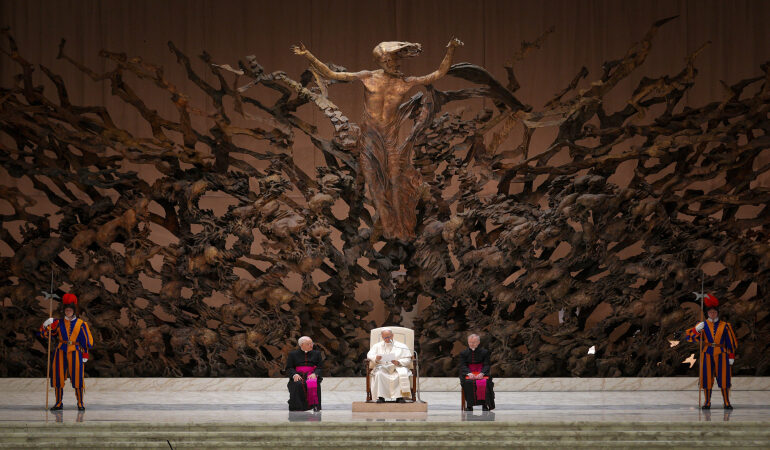

The pace of global affairs has accelerated dramatically in recent years. Political decisions are made in real time, public opinion shifts within hours, and institutions are often expected to respond immediately to every development. Against this backdrop, the Vatican stands apart. Under Pope Leo XIV, the Holy See has embraced a posture of strategic patience that appears deliberate rather than detached.
This patience is not a refusal to engage with the modern world. Instead, it reflects a governing philosophy that prioritizes long-term credibility over short-term reaction. By resisting the pressure to respond instantly, the Vatican is asserting a form of leadership rooted in continuity, discernment, and institutional memory.
Strategic Patience as a Governing Principle
At the core of the Vatican’s approach is the belief that not every moment requires an immediate response. Strategic patience allows leadership to assess consequences before acting. Under Pope Leo XIV, this principle has become more visible in how decisions are timed and communicated.
Rather than reacting to external pressure, the Vatican allows issues to mature. This creates space for consultation and reduces the risk of contradictory messaging. Patience, in this sense, becomes a tool for preserving authority and ensuring coherence across governance structures.
Resisting the Culture of Constant Reaction
Modern institutions often feel compelled to comment on every global development. The Vatican has taken a different path. Its restrained public posture reflects an understanding that constant reaction can weaken credibility rather than strengthen it.
By limiting immediate responses, the Holy See avoids being drawn into cycles of controversy. This restraint preserves the seriousness of its interventions. When the Vatican does speak, its voice carries greater weight precisely because it is not constant.
Time as an Asset in Decision Making
The Vatican operates on a historical scale that few institutions can claim. This long view shapes its approach to time. Under Pope Leo XIV, time is treated as an asset rather than a constraint.
Allowing decisions to unfold over months rather than days encourages thorough evaluation. It also respects the complexity of global Church realities. Strategic patience ensures that outcomes are grounded in careful judgment rather than urgency driven compromise.
Stability in an Era of Volatility
Global volatility has placed enormous strain on institutions. Rapid political shifts and social change have eroded trust in leadership across many sectors. The Vatican’s patient approach offers an alternative model centered on stability.
By maintaining a steady rhythm, the Holy See positions itself as a constant presence. This steadiness reassures local Churches and international partners alike. Stability becomes a form of influence, especially in moments of uncertainty.
Strategic Patience and Global Engagement
Patience also shapes how the Vatican engages globally. Diplomatic efforts, pastoral guidance, and administrative decisions are often conducted quietly and over extended periods. This allows relationships to develop without public pressure.
Under Pope Leo XIV, this approach reinforces the Vatican’s role as a listener and mediator. Strategic patience enables engagement with diverse actors without alignment to immediate agendas. Over time, this enhances trust and preserves the Church’s ability to act as a moral interlocutor.
Governance Without Urgency
Internally, strategic patience influences governance culture. Vatican departments are encouraged to prioritize accuracy and consistency over speed. This reduces internal tension and improves coordination.
When urgency is removed from routine decision making, institutions function more effectively. Governance becomes less reactive and more intentional. This internal calm supports clearer leadership and stronger accountability.
Conclusion
In a fast-moving world, the Vatican’s strategic patience stands as a conscious choice rather than a passive stance. Under Pope Leo XIV, patience functions as a governing principle that strengthens authority, preserves credibility, and supports long-term engagement. By valuing time, restraint, and continuity, the Holy See demonstrates that enduring leadership does not depend on speed, but on discernment and stability.