
Turning Point Youth Conference Opens After Founder’s Death
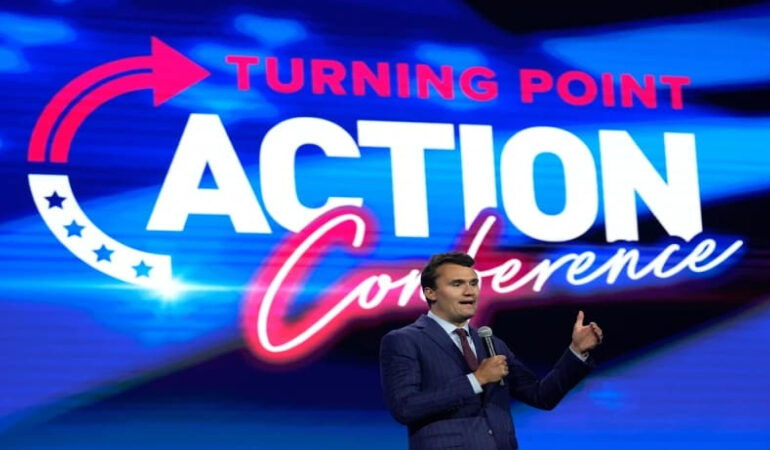

A major conservative youth conference opened in Phoenix as organizers and attendees gathered for the first time since the killing of Turning Point USA founder Charlie Kirk, marking a moment of uncertainty for a movement long shaped by his leadership. Thousands are expected to attend the multi day event, which blends political messaging, religious themes, and youth activism. The conference is proceeding without its founder, whose influence once unified college activists, media figures, and political leaders within a broad conservative coalition. Organizers describe the gathering as both a tribute and a test, as questions remain about the future direction of the movement in the absence of the figure who defined it for more than a decade.
The event features a lineup of prominent political personalities, pastors, and media figures, along with musical performances and faith oriented programming. Catholic figures and Christian speakers are scheduled to address attendees alongside political activists, reflecting the conference’s emphasis on religion as a core element of cultural identity. Charlie Kirk’s widow, Erika Kirk, has assumed a leading role within the organization and is expected to be a central presence throughout the conference. Her emergence as a public leader comes amid grief and heightened scrutiny, as supporters view the gathering as a continuation of Kirk’s vision while navigating deepening internal divisions within the broader conservative movement.
Those divisions have become more visible since Kirk’s death, particularly around questions of nationalism, antisemitism, and the relationship between religion and political power. Disputes among conservative influencers have intensified, with some voices clashing over support for Israel and the boundaries of acceptable rhetoric. Turning Point events have increasingly become arenas where these tensions surface publicly. Organizers face the challenge of maintaining unity while distancing the movement from conspiracy theories and extremist language that risk alienating both supporters and allies. The conference is unfolding as the movement recalibrates its identity amid leadership transition and ideological strain.
Beyond politics, the gathering reflects broader cultural currents among young Americans seeking meaning, belonging, and moral clarity in a polarized environment. Turning Point’s style, often resembling large scale worship events as much as political rallies, underscores how faith and activism continue to intersect for many participants. As the conference continues, its tone and outcomes will be closely watched as indicators of whether the movement can sustain cohesion without its founder. For supporters, the event represents resilience and continuity, while critics see it as a moment that exposes unresolved fractures within a highly visible youth driven political culture.