


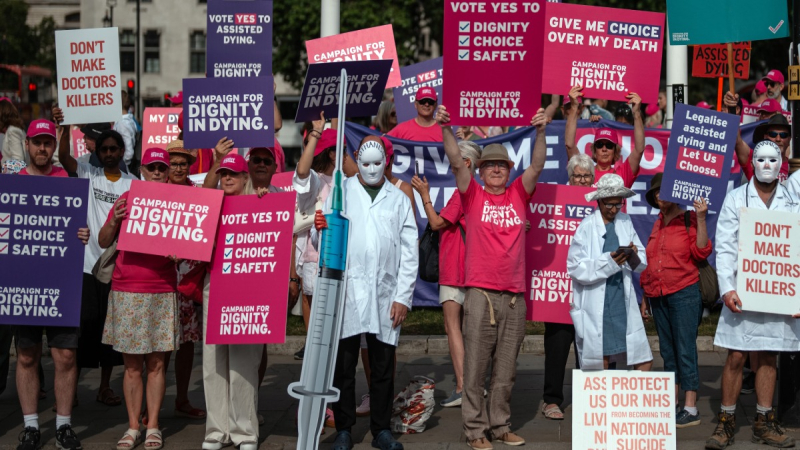

UK Assisted Suicide Bill Likely to Fail After Government Withholds Further Time
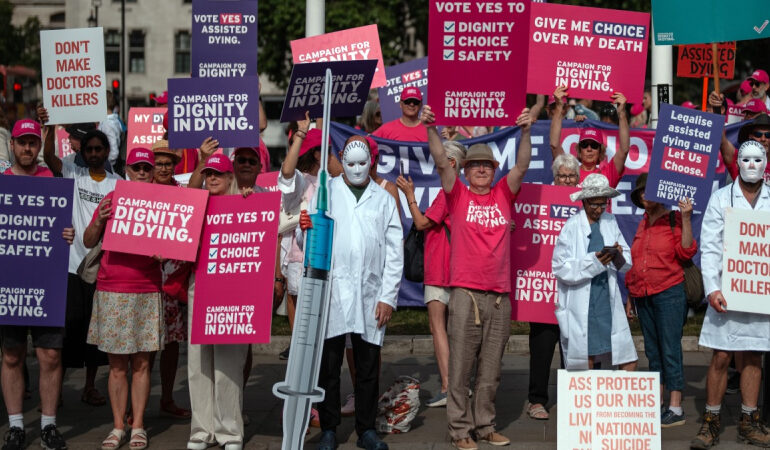

The proposed assisted suicide legislation in the United Kingdom appears unlikely to become law after confirmation that the Government will not allocate further parliamentary time for its progress in the House of Lords. The development has significantly reduced the prospects of the Terminally Ill Adults End of Life Bill advancing in the current session.
Private Members’ Bills, such as this one, are typically debated on Fridays, limiting available legislative time. Although additional sitting Fridays had previously been granted to allow further debate, the Bill has not completed Committee Stage and has yet to move to Report Stage or Third Reading. Without further time allocation, it is expected to lapse.
Supporters of the legislation have argued that a small number of peers were obstructing progress by submitting numerous amendments. However, recent parliamentary analysis indicates that opposition in the Lords is broader than suggested. Nearly 80 peers have tabled or signed amendments raising concerns, while 131 peers have spoken against the Bill or formally expressed reservations during its passage.
Those raising objections include members of the House of Lords with experience in medicine, law, ethics, and disability advocacy. Among them are former senior health officials, legal experts, and specialists in palliative medicine. Critics of the Bill argue that its safeguards are insufficient and that further scrutiny is necessary given the seriousness of its implications.
Claims of deliberate filibustering have also been contested. Observers note that average speech lengths during debates have remained relatively short and consistent with normal legislative practice. As a Private Members’ Bill not included in any party manifesto, it is not subject to conventions requiring automatic passage through the upper chamber.
Attention has turned to whether supporters might seek to revive the Bill in the next parliamentary session and attempt to bypass the House of Lords using the Parliament Acts. Such a move would allow legislation to be enacted without the consent of the Lords, provided certain conditions are met. However, legal and constitutional experts have described this as unprecedented for a Private Members’ Bill and potentially controversial.
Recent public opinion polling has added another dimension to the debate. Surveys suggest that a majority of respondents do not support bypassing the House of Lords to force the legislation through. While views on assisted suicide remain divided, strong support for immediate legalisation appears limited to a minority of the population.
Opponents of the Bill argue that Parliament should instead focus on strengthening palliative care and end of life support services. They maintain that improved access to pain management, hospice care, and psychological assistance offers a more secure and compassionate response to suffering.
The debate surrounding assisted suicide continues to raise complex ethical, medical, and legal questions. With the current Bill unlikely to advance further in this session, lawmakers face renewed decisions about how to address end of life care within the existing legal framework.