
US Churches Support Venezuelan Diaspora Amid Uncertain Future

Christian leaders across the United States are intensifying pastoral outreach to Venezuelan communities grappling with uncertainty following dramatic political developments in their homeland. As news of the capture of former leader Nicolás Maduro spread, emotions among Venezuelans abroad ranged from relief to deep anxiety about what lies ahead. In cities with large diaspora populations, especially in South Florida, churches have become places of prayer, reflection, and reassurance. Clergy serving these communities report that many faithful are struggling to reconcile hope for change with fear of instability and displacement. For millions who left Venezuela over the past decade, faith communities remain among the few trusted spaces where concerns about family, legal status, and national identity can be voiced openly. In this tense moment, Christian leaders are urging calm and prayer, emphasizing the Church’s role as a source of moral guidance and emotional stability.
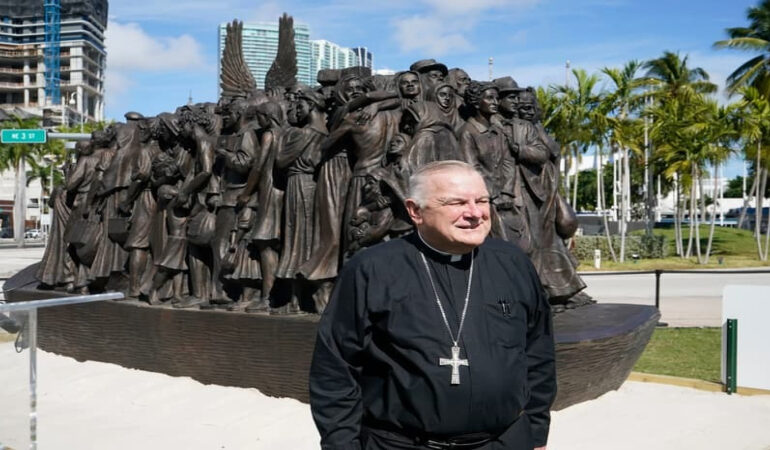
The Venezuelan diaspora in the United States now numbers in the millions, shaped by years of political and economic crisis. Many settled in Florida after arduous journeys through Latin America or through humanitarian programs that have since been scaled back. In the Miami area, where the largest Venezuelan community resides, celebrations following Maduro’s removal were tempered by concern over immigration uncertainty and conditions back home. Thomas Wenski, who ministers to thousands of Venezuelan Catholics, said many feel torn between joy and apprehension. While some hope for democratic renewal, others worry about returning to a country still marked by division. Church leaders note that the loss of temporary legal protections has heightened fear among families unsure whether meaningful change will take hold in Venezuela.
Within Venezuela, religious leaders initially called for restraint and patience, reflecting concern over potential unrest. In contrast, many pastors serving diaspora congregations openly welcomed Maduro’s removal while stressing the need for reconciliation. Church leaders in the United States see an opportunity for the Church to help guide Venezuela through a fragile transition. They recall years of strained relations between Church and state, during which clergy often spoke out against repression and social injustice. Despite tensions, the Church has remained one of the few institutions seen as independent and credible. Faith leaders argue that this moral authority positions the Church to encourage dialogue, defend human dignity, and promote peaceful coexistence at a time when polarization threatens to deepen.
Across the country, Venezuelan communities are gathering in churches to pray for peace and justice. In Doral, often called Little Venezuela, worshippers filled parishes with national flags and rosaries, asking for a fair transition and healing for their country. Similar services took place in cities such as Philadelphia, where prayer gatherings were described as emotional but hopeful. Pastors from Catholic and evangelical traditions alike urged believers to entrust the future to God while rejecting violence and hatred. For many Venezuelans, the Church offers a rare space of protection and reconciliation amid conflicting emotions. As uncertainty continues, Christian leaders insist that prayer, patience, and solidarity will be essential for sustaining hope within a scattered and anxious diaspora.