

Vatican Advent Reflection Warns Against False Unity
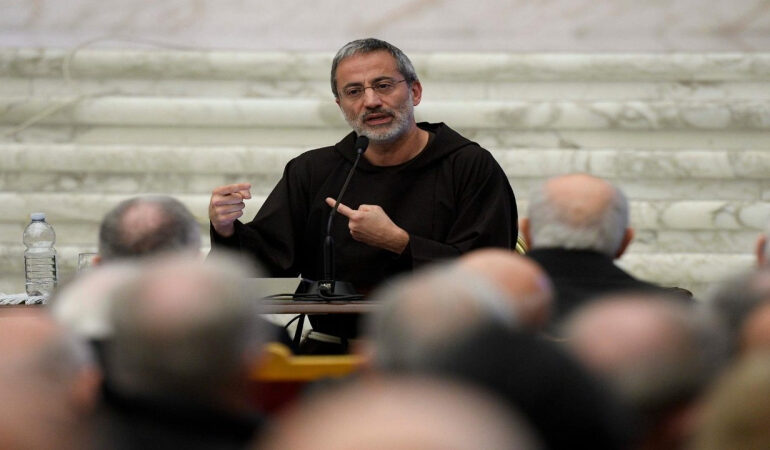

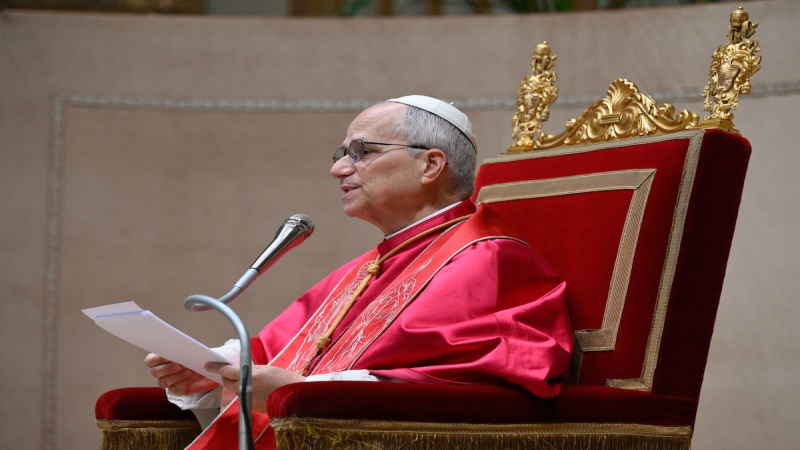
A senior Vatican preacher has used the Church’s Advent season to issue a warning about forms of unity that suppress difference rather than foster genuine communion, framing the message as both a theological reflection and a response to contemporary social pressures. Addressing Pope Leo XIV and members of the Roman Curia, Father Roberto Pasolini emphasized that unity rooted in uniformity ultimately undermines human dignity and freedom. He argued that the desire for predictable sameness often grows out of fear of fragmentation, but carries its own risks when it silences individual voices. The reflection placed these concerns within a broader Christian understanding of creation, where distinction and diversity are presented as foundational rather than disruptive. By grounding his message in biblical imagery, Pasolini connected ancient narratives with modern institutional and cultural challenges facing both the Church and wider society.
Drawing on the story of the Tower of Babel, Pasolini described attempts to impose sameness as a flawed response to human insecurity. He noted that the pursuit of total agreement often replaces authentic relationship with control, producing the appearance of unity while eliminating meaningful participation. This dynamic, he observed, has appeared repeatedly in modern history, including under totalitarian systems that enforced ideological conformity at the expense of conscience. The reflection also addressed contemporary digital realities, warning that technological systems can reinforce homogenization through algorithm driven information loops and pressure for instant consensus. Pasolini suggested that these trends risk narrowing human experience and discouraging thoughtful disagreement. He acknowledged that the Church itself has, at times, struggled with confusing unity of faith with uniform practice, a tension that continues to shape internal debates and governance.
The preacher contrasted these patterns with the Christian vision of communion, pointing to Pentecost as an example of unity that preserves difference. In that account, diversity of language remains intact while understanding is made possible, illustrating how plurality can coexist with shared purpose. Pasolini extended this image to the ongoing renewal of the Church, describing reform not as a linear project but as a process marked by continuity and reassessment. Rebuilding, he argued, requires openness to dialogue and the willingness to hold together tradition and change without erasing nuance. The reflection framed this approach as essential for maintaining credibility in a complex world, where institutions are judged not only by coherence but by their capacity to respect diversity while remaining faithful to their core mission.