

Vatican Declares Dozulé Apparitions “Not of Supernatural Origin”

The Dicastery for the Doctrine of the Faith (DDF) has officially ruled that the alleged apparitions said to have taken place in Dozulé, France, during the 1970s are not of supernatural origin. The decision, approved by Pope Leo XIV and communicated by the Prefect, Cardinal Víctor Manuel Fernández, brings a definitive conclusion to decades of controversy surrounding the claims.
In a formal letter authorizing Bishop Jacques Habert of Bayeux-Lisieux to issue a decree, the DDF stated that the supposed apparitions, which inspired plans for a massive “Glorious Cross” said to grant forgiveness and salvation to all who approached it, lack any evidence of divine authenticity. The statement reads that the phenomenon “is to be considered, definitively, as not supernatural in origin.”
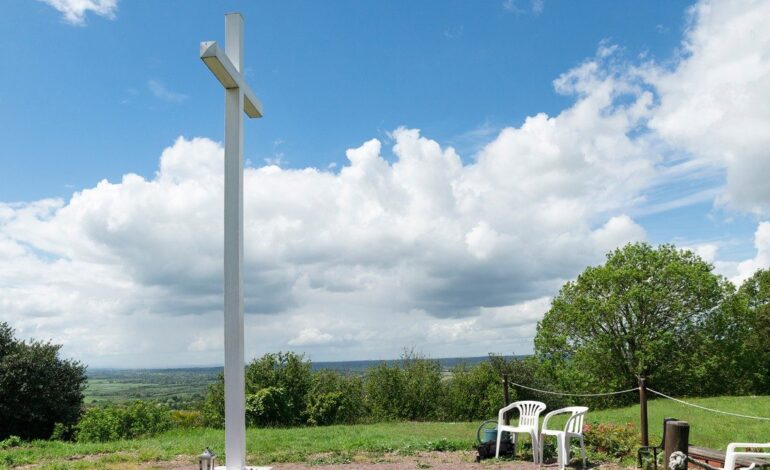
Between 1972 and 1978, a local woman named Madeleine Aumont claimed to have received 49 visions of Jesus, in which He allegedly requested the construction of an enormous illuminated cross. The structure, never built, was to stand 738 meters tall with 123-meter arms, symbolizing universal redemption and visible for miles. Although the vision never materialized, smaller “Crosses of Love” modeled on the Dozulé concept have since appeared in several countries.
Concerns about the authenticity of the messages date back more than 40 years. In 1983, then-Bishop Jean-Marie-Clément Badré publicly rejected the claims, warning that the fundraising efforts and fervent promotion of the so-called revelations were causing confusion and division. Two years later, he declared that the phenomena showed “no signs that would authorize the Church to recognize the alleged apparitions as authentic.”
Bishop Habert recently requested official guidance from the DDF in accordance with updated Vatican norms for evaluating supernatural claims. Cardinal Fernández’s letter confirmed the decision and authorized the bishop to publish a formal declaration rejecting the supernatural character of the events.
The letter cites several theological and doctrinal concerns, including the comparison of the proposed Dozulé Cross with the Cross of Jerusalem, which, it said, could confuse believers by implying that Christ’s sacrifice could somehow be repeated or physically re-created. It also noted that several messages attributed to the apparitions present problematic teachings, such as the claim that the “Glorious Cross” was necessary for global salvation and could absolve sins simply by being visited.
“The Cross does not require 738 meters of steel or concrete to be recognized,” the DDF emphasized. “It is raised every time a heart opens itself to forgiveness, every time hope is rekindled, and every time a believer entrusts their life to Christ.”
The document also pointed out that one of the alleged prophecies that the “Glorious Cross” and its sanctuary must be built before the end of the 1975 Holy Year, claimed to be the last in history, was demonstrably false. The Church has celebrated two more ordinary Holy Years (2000 and 2025) and two extraordinary ones (1983 and 2016) since that time.
Other passages from the reported messages were found to contain apocalyptic language suggesting that Christ’s Second Coming was imminent if the cross were not erected. The Vatican stressed that, while the return of Christ is an essential part of Christian belief, the Church rejects any attempt to assign specific dates or physical signs to this mystery.
In its conclusion, the Dicastery reiterated that no private revelation can bind the conscience of believers or serve as a universal condition for salvation. “The veneration of the Cross is not about the material object,” the letter stated. “Christians do not adore wood or metal but the One who offered His life upon it.”
The statement affirmed that authentic devotion must lead to conversion, humility, and charity rather than superstition. “The Cross stands wherever love triumphs over hatred,” the letter concluded, calling believers to recognize in every act of faith and mercy the true sign of redemption found in Christ’s Paschal Mystery.