



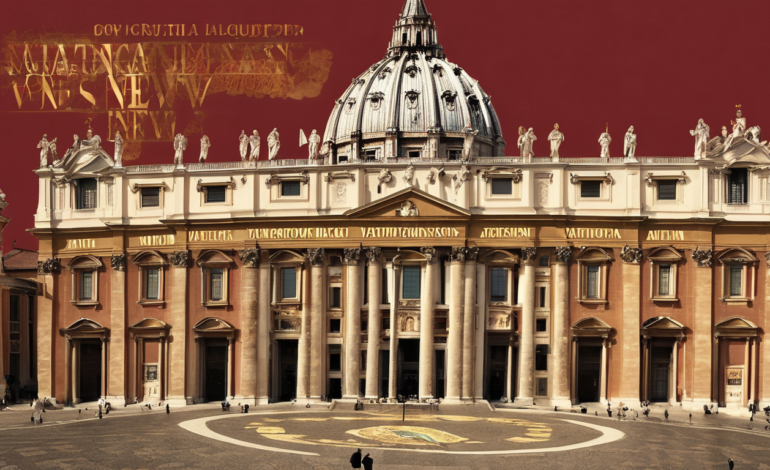

Introduction of Indonesian at Vatican News
Vatican News Indonesian is now live as the platform’s 57th official language, a concrete expansion rather than a symbolic gesture. The rollout puts reporting, papal texts, and Vatican updates into a linguistic register used daily across the world’s largest Muslim-majority nation and by Indonesians abroad. The launch aligns with the newsroom’s steady push to publish faster, translate more reliably, and distribute stories where audiences already consume news. Official confirmation and details were carried by Vatican News’ announcement on adding Indonesian. The move slots Indonesian into the same editorial system as other language editions, aiming for consistent standards in accuracy, tone, and sourcing across every desk worldwide.
Significance of Language in Church Communication
Adding Indonesian is a practical play in Vatican communication because language is where credibility is won or lost in religious media outreach. Translation is not cosmetic; it controls how Catholic vocabulary lands, how statements about conflict or diplomacy are framed, and how pastoral messages avoid distortion when they travel across cultures. When the Church speaks through a second language, nuances around doctrine, liturgy, and social teaching can drift, especially when headlines are clipped for mobile feeds. A dedicated Indonesian service narrows that risk by moving from ad hoc translation to structured editorial production. It also strengthens global Catholic news by making the same developments readable without delay, letting Indonesian Catholics interpret Vatican coverage with fewer intermediaries and less reliance on recycled summaries from fragmented outlets.
The Role of the Dicastery for Communication
The Dicastery for Communication sits at the center of this expansion, coordinating newsroom workflows, translation pipelines, and distribution across web, radio, and social channels. In practice, adding a language requires staffing decisions, training in style and sourcing, and a technical pathway that keeps publishing stable under heavy traffic. It also demands editorial discipline so local-language desks remain faithful to the original text while writing naturally for their readership. That matters when sensitive Vatican stories break and wording carries diplomatic weight. Related coverage about how Church institutions set standards and guardrails for public messaging can be seen in reporting such as Holy See warnings on rising digital bias, where precision and framing shape how audiences interpret the Church’s stance. External reporting from America Magazine’s Vatican and media coverage offers additional context on how Rome’s communications strategy has evolved.
Impact on Indonesian Catholic Community
For Indonesian Catholics, the immediate impact is access: faster, clearer Vatican reporting that does not require navigating Italian or English to verify what was actually said. This matters in a media environment where partial quotes can escalate into controversy, and where Catholic stories compete with a constant churn of political and cultural news. The Indonesian edition can also amplify regional Church life by connecting local concerns to the wider Catholic agenda without forcing readers into a foreign-language frame. The connection is already visible in how Asian Catholic events are covered across the ecosystem, including coverage of a Vietnam youth congress and mission themes. In a country shaped by diversity, reliable Catholic reporting in Indonesian can reduce friction, improve comprehension, and give parishes and schools a dependable reference point for Church news.
Future Prospects for Vatican News
The Indonesian addition signals that Vatican News is still building toward broader reach, but the real test will be execution: steady output, transparent sourcing, and a tone that remains both accessible and authoritative. Growth can’t be measured only by language count; it’s measured by whether audiences return for verified information during fast-moving moments, from major Church decisions to global crises. The broader global Catholic news race is also defined by trust and speed, and Vatican outlets compete with independent Catholic publishers and local media for attention. Future success will hinge on whether the Indonesian desk can deliver sharp reporting while maintaining the Vatican’s institutional voice. Related governance and Church-wide reporting, such as Synod reporting on pastoral challenges and policy themes, shows why consistent language services matter when complex documents land and need accurate, readable interpretation.