


Vatican Radio Marks 95 Years as English Africa Service Nears 76-Year Milestone

Title: Vatican Radio Marks 95 Years as English Africa Service Nears 76-Year Milestone
Vatican Radio commemorated its 95th anniversary on 12 February 2026, marking nearly a century since it first transmitted the voice of the Pope to the world. Established in 1931 by Italian inventor Guglielmo Marconi at the request of Pope Pius XI, the station began with a historic papal radio message that signaled the Catholic Church’s early embrace of modern communication tools to support its pastoral mission.
Over the decades, Vatican Radio has grown into one of the Church’s most enduring global media institutions. Its English Language Programme was introduced in 1937, broadening access to papal teaching and Church news for English-speaking audiences. In 1950, English broadcasts began reaching listeners across Africa, responding to a continent undergoing profound political and cultural transformation.
The mid twentieth century was a defining period for Africa, marked by the gradual dismantling of colonial structures and the emergence of newly independent states. As nations redefined their identities, the Catholic Church on the continent was also evolving. Local clergy increasingly assumed leadership roles, and indigenous bishops began guiding dioceses that had once been administered primarily by missionary clergy. Radio played a significant role in supporting this transition by connecting local communities to the universal Church.
Although English broadcasts to Africa began in 1950, the English Africa Service was formally established in 1979. The move reflected changing social, political, and ecclesial realities across the continent and underscored the Vatican’s commitment to tailored communication strategies for regional audiences. In 1993, daily Gospel readings were introduced in Kiswahili, a widely spoken language in East Africa. By the following year, Kiswahili had become an established language programme within the English Africa Service.
The station continued to explore linguistic outreach with the launch of daily Hausa broadcasts in 2002, aimed at reaching millions in West Africa. While the Hausa initiative did not continue long term, it illustrated ongoing efforts to adapt to the continent’s diverse linguistic landscape.
The present half hour daily English format was adopted in 1995, following the First Special Assembly for Africa of the Synod of Bishops. Its thematic structure reflected pastoral priorities highlighted in the apostolic exhortation Ecclesia in Africa issued by Pope John Paul II. Further elements were incorporated after the publication of Africae Munus by Pope Benedict XVI in 2011, building on themes from the Second African Synod.
Today, under the Dicastery for Communication, the English Africa Service reaches 23 African countries where English is an official language. While shortwave transmissions once carried broadcasts directly from Rome, distribution now relies largely on partnerships with diocesan radio stations and networks such as Radio Maria across the continent.
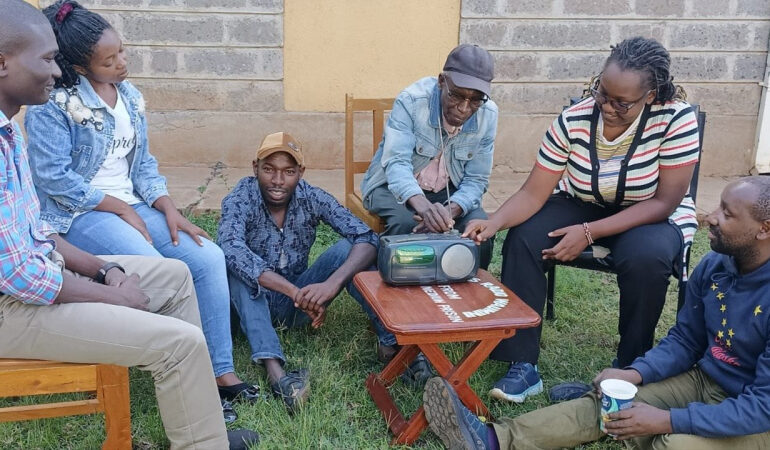
Despite rapid growth in digital media, radio remains a trusted and accessible source of information in many African communities. In rural areas, especially, limited internet connectivity, inconsistent electricity supply, and lower literacy rates make radio a vital channel for news, catechesis, and pastoral guidance. Through its evolving platforms, Vatican Radio continues to serve as a bridge between the Holy See and local Churches across Africa.