

Vatican Radio Marks 95 Years of Service to the Pope and the Global Church
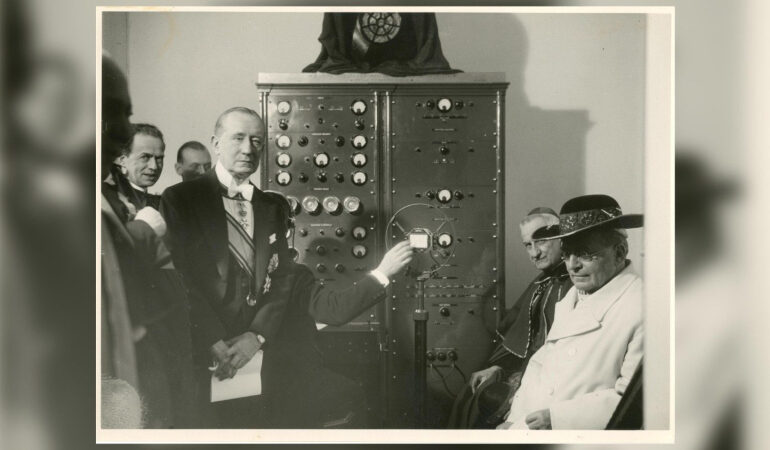

Vatican Radio has marked its ninety fifth anniversary, commemorating nearly a century of service to the Pope and Catholic communities worldwide. Founded on 12 February 1931, the station began as a bold technological and pastoral initiative and has since evolved into a central pillar of the Holy See’s global communications network.
The first transmission was overseen by Italian inventor Guglielmo Marconi, who designed and built the radio system at the request of Pope Pius XI. On that historic day, Marconi announced that for the first time the Pope’s voice could be heard simultaneously across the world. The Pope then delivered the first papal radio message in Latin, addressing peoples and nations beyond geographical borders. The initiative was entrusted to the Jesuits, who were given responsibility for operating the new service.
From its earliest days, Vatican Radio was more than a technical experiment. It represented a strategic pastoral decision to employ the most advanced communication tools available in order to proclaim the Gospel and strengthen unity within the universal Church. Over the decades, the broadcaster accompanied major moments in Church and world history, including the Second World War, the Second Vatican Council, and successive Jubilee celebrations.
Throughout periods of conflict and political upheaval, Vatican Radio played a role in humanitarian efforts, including assisting families separated during wartime. It also provided spiritual support to communities living under totalitarian regimes, offering information and encouragement when other channels were restricted. The station chronicled global developments while interpreting events in light of Catholic social teaching.
To date, Vatican Radio has served nine Popes, adapting its structure and methods to changing technological landscapes. In recent years, it has become part of a broader communications reform that established the Dicastery for Communication. The integration of radio, print, television, and digital platforms under a unified framework has aimed to strengthen coordination while preserving the distinct identity of each medium.
Today, Vatican Radio contributes to the digital ecosystem of Vatican News, producing content in 56 languages through written, audio, video, and sign language formats. Its staff includes journalists and professionals from dozens of nations, reflecting a multicultural approach that seeks to reach both geographical and existential peripheries. Distribution methods now extend far beyond traditional shortwave transmissions to include streaming, podcasts, satellite broadcasting, and social media platforms.
The anniversary coincides with ongoing reflection within the Church on emerging technologies such as artificial intelligence. While AI offers new possibilities for media production and distribution, Vatican communicators have emphasized that technology must remain at the service of the human person. Thought, discernment, and responsibility cannot be replaced by automated systems.
As Vatican Radio enters its ninety sixth year, it continues its mission of carrying the voice of the Pope, the message of the Gospel, and the teachings of the Church to communities around the world, maintaining a presence that bridges distances and fosters communion.