

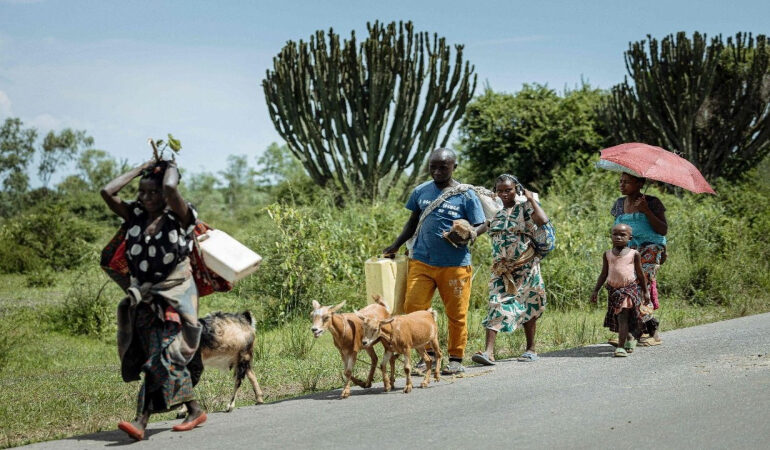

The rapid escalation of conflict in eastern Democratic Republic of the Congo has triggered a severe humanitarian crisis, with children bearing the greatest burden as armed groups advance across South Kivu. International agencies report that more than 100,000 children have been forced from their homes since the start of December, part of a broader wave of displacement affecting hundreds of thousands of civilians. Families have fled villages and towns under pressure from ongoing fighting, seeking safety within the country or crossing into neighboring states. The scale and speed of displacement have raised concerns about access to food, shelter, healthcare, and education, particularly for minors whose lives are being disrupted at a critical stage of development.
Church leaders have added their voice to growing international concern, framing the crisis as both a humanitarian emergency and a moral challenge. From the Vatican, expressions of grave concern have highlighted the human cost of renewed fighting and the responsibility of political and military actors to protect civilians. Reports from the region indicate that schools have been damaged or destroyed, students have been killed or injured, and entire communities uprooted with little warning. The targeting or incidental harm of educational spaces has drawn particular alarm within Church-linked circles, where education is viewed as essential to long-term stability and reconciliation. These developments have reinforced calls for restraint, protection of noncombatants, and urgent humanitarian access.
The advance of armed groups in South Kivu has also intensified regional tensions, complicating diplomatic efforts aimed at restoring stability. Population movements across borders into Burundi and Rwanda have placed additional strain on already fragile systems, while conflicting claims among regional actors risk prolonging insecurity. In this context, the displacement of children is increasingly seen as a warning sign of deeper structural failure, where cycles of violence undermine both social cohesion and future economic prospects. Vatican-linked commentary has consistently emphasized that children should never pay the price of conflict, urging sustained international engagement, credible peace processes, and long-term investment in protection mechanisms that place human dignity at the center of regional security efforts.